2026 Top Biological Safety Cabinets for Laboratory Safety and Protection?
Laboratories play a critical role in research and development. Ensuring safety in these environments is essential. The Biological Safety Cabinet (BSC) is a key element in this process. It protects both the user and the samples from contamination and exposure.
When choosing a BSC, consider various factors. The design, airflow patterns, and filtration systems greatly affect performance. A cabinet must meet specific standards to ensure adequate protection. It's worth noting that not all cabinets are created equal. Some users overlook the maintenance aspect, which can lead to performance issues.
The need for the right Biological Safety Cabinet is evident. Choosing the wrong model might compromise safety protocols. This decision should not be taken lightly. The research conducted in such spaces often has significant consequences. Therefore, careful consideration and regular assessments of the cabinets are crucial. The ultimate goal is a safer laboratory environment.

Top Features of Biological Safety Cabinets: Ensuring Laboratory Safety
Biological safety cabinets (BSCs) are essential for laboratory safety. They protect users and samples from contamination. Recent studies suggest that around 35% of laboratory accidents originate from inadequate safety equipment. This highlights the importance of high-quality BSCs. Features like HEPA filters can trap 99.97% of airborne particles. This efficiency is vital for microbiological work. Without proper filtering, the risk of exposure increases significantly.
In addition to filtration, other features enhance safety. Some BSCs offer adjustable airflow velocities. Studies show that consistent airflow reduces contamination risk. However, changes in airflow patterns may lead to unforeseen hazards. Researchers often overlook this detail, resulting in compromised lab environments. Another area for attention is the maintenance of these cabinets. Regular servicing ensures optimal filtration efficiency. Neglecting maintenance can lead to a false sense of security.
Furthermore, the ergonomics of BSC design matter. User-friendly interfaces help in reducing operator fatigue. A 2022 report indicated that ergonomic design can improve productivity by up to 20%. Yet many existing models lack these considerations, which can impact user performance. Addressing these shortcomings can lead to improved laboratory safety and efficiency in the long run.
2026 Top Biological Safety Cabinets for Laboratory Safety and Protection
| Model |
Class |
Size (WxDxH, mm) |
Airflow (CFM) |
Noise Level (dB) |
Energy Efficiency |
| Model A |
Class II Type A2 |
1200 x 800 x 2000 |
90 |
55 |
High Efficiency |
| Model B |
Class I |
1000 x 700 x 1900 |
80 |
60 |
Moderate |
| Model C |
Class II Type B2 |
1500 x 800 x 2100 |
100 |
52 |
High Efficiency |
| Model D |
Class II Type A1 |
1100 x 700 x 1950 |
75 |
58 |
High Efficiency |
| Model E |
Class III |
1600 x 900 x 2200 |
120 |
50 |
Very High Efficiency |
Classifications of Biological Safety Cabinets: Types and Applications
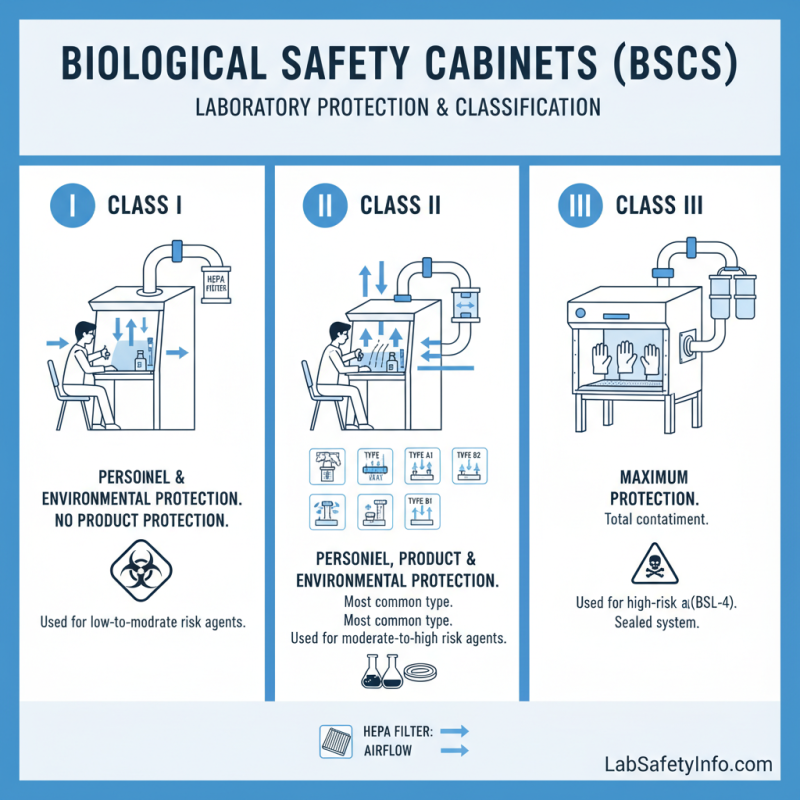
Biological safety cabinets (BSCs) play a crucial role in laboratory safety. They are classified into different types based on their design and airflow patterns. The main categories are Class I, Class II, and Class III cabinets. Each serves unique purposes and applications in various fields.
Class I cabinets protect the user from exposure to hazardous materials. They provide a front air barrier, ensuring that contaminants do not escape. Many labs utilize this type for general microbiological work. However, they do not provide product protection, which can be a limitation.
Class II biological safety cabinets are more versatile. They come in various configurations, like A2 and B2, each suited for different tasks. They offer both personnel and product protection. These cabinets are essential for working with human pathogens. Make sure your lab is equipped with the appropriate filter system.
Class III cabinets are truly sealed environments. They are ideal for working with high-risk agents. Users operate them through gloves built into the cabinet surfaces. This type offers a high level of containment, but the accessibility can be challenging.
**Tips:** Always check the certification of your BSC. Regular maintenance is key for optimal performance. Consider placement in your lab layout to ensure airflow and easy access.
2026 Innovations in Biological Safety Cabinet Technology and Design
The evolution of biological safety cabinets (BSC) is critical for laboratory safety and protection. In 2026, we witness significant innovations in technology and design. Advanced filtration systems now provide superior air purity. The incorporation of smart sensors enhances real-time monitoring. These sensors can detect airflow and filter performance, ensuring maximum safety.
Tips: Regularly test and maintain cabinet airflow. This ensures optimum performance and safety standards.
Another notable feature is ergonomic design. Cabinets are becoming more user-friendly. Adjustable heights and easy-access features reduce strain during use. This addresses the common discomfort felt by lab personnel.
Tips: Consider the workspace layout carefully. A well-organized area improves safety and workflow efficiency.
Moreover, the aesthetic appeal of BSCs has improved. Sleek designs enhance the laboratory ambiance, making it more inviting. However, it is essential not to overlook functionality for style. Some new designs may compromise usability.
Tips: Always prioritize practical features over appearances. Functionality should never be sacrificed for design trends.
Regulatory Standards and Compliance for Biological Safety Cabinets
Biological safety cabinets (BSCs) play a critical role in laboratory safety. They protect both personnel and the environment from hazardous biological agents. Regulatory standards are essential for ensuring these cabinets function correctly. Agencies like the CDC and NSF outline these standards, but compliance can be challenging. A 2020 report indicated that over 30% of laboratories fail to meet basic safety requirements.
Venting systems and HEPA filters are vital components. However, many laboratories overlook regular maintenance checks. A routine inspection should happen at least annually, but often it doesn't. This negligence risks exposure to harmful pathogens. Moreover, proper training for users is often inadequate. A survey found that around 25% of lab workers felt unprepared to operate BSCs safely.
Understanding compliance can be complex. Standards may vary by region, leading to confusion. Laboratories sometimes use outdated equipment that doesn't meet current regulations. This situation calls for constant revision of safety protocols. Investing in training and upgrading equipment is essential for laboratory safety. Balancing cost and safety is often a dilemma many facilities face.
2026 Top Biological Safety Cabinets for Laboratory Safety and Protection
This chart illustrates the safety ratings of various types of biological safety cabinets based on industry compliance standards. Higher ratings indicate better protection and safety for laboratory environments.
Comparative Analysis of Leading Biological Safety Cabinet Brands in 2026
In 2026, the demand for biological safety cabinets in laboratories has increased significantly. These cabinets are essential for protecting both the user and the environment from harmful biological agents. Many laboratories face challenges selecting the right model due to various specifications and features available. Different brands offer unique designs, filtration systems, and airflow patterns, impacting their effectiveness in different scenarios.
Some cabinets excel in airflow management, but their noise levels may detract from user comfort. Others have advanced filtration systems that can trap smaller particles, yet their maintenance can be cumbersome. Ease of cleaning is crucial in lab environments, but some cabinets are not user-friendly. Form and function must be carefully balanced in selecting a biological safety cabinet, as operational efficiency and safety heavily depend on this choice.
Laboratories should consider how each cabinet fits their specific needs. Customization options can greatly impact user satisfaction and safety outcomes. Collecting feedback from staff is essential in identifying which features enhance usability. The right balance of safety, comfort, and practicality may take time to assess. Ultimately, the goal is to create an environment where safety is prioritized without sacrificing efficiency.