Leave Your Message

Top 10 Benefits of Using an Ultra Clean Workbench for Your Workspace

In today's fast-paced work environments, maintaining cleanliness is crucial. An Ultra Clean Workbench offers numerous advantages that can enhance productivity and safety. These workspaces are designed to minimize contamination. They encourage a streamlined workflow and are essential in laboratories, healthcare, and manufacturing sectors.

Using an Ultra Clean Workbench can vastly improve air quality and reduce the risk of errors. Clean surfaces help prevent cross-contamination, especially when working with sensitive materials. However, not all users fully understand its benefits. Many overlook the importance of regular maintenance. Without proper care, even the best clean workbench can lose its efficacy.

Ultimately, an Ultra Clean Workbench is more than just a physical space; it represents a commitment to excellence. This commitment fosters a culture of safety. Workers who prioritize cleanliness in their environments often see increased satisfaction. Investing in these workstations may require initial effort, yet the long-term benefits far outweigh the challenges.
Top 10 Benefits of Using an Ultra Clean Workbench for Your Workspace

The Importance of Contamination Control in Laboratory Environments

Contamination control is crucial in laboratory environments. A clean workspace minimizes the risks of unwanted particles. This is especially important in fields like pharmaceuticals or biotechnology. Contaminants can compromise experiments and lead to unreliable results.

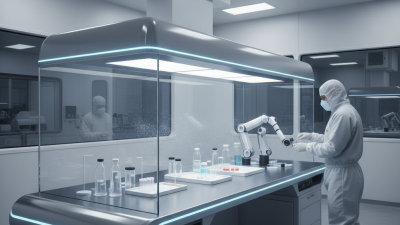
Using an ultra clean workbench greatly enhances contamination control. These workbenches provide a sterile environment suitable for sensitive procedures. They often feature high-efficiency particulate air (HEPA) filters. This ensures that airborne particles are trapped effectively. However, merely having a clean workbench is not enough. Regular monitoring and maintenance are essential.

Many labs struggle with maintaining proper cleanliness. Sometimes protocols are overlooked or improperly followed. This can lead to contamination incidents. Training staff on the importance of these practices is vital. Encouraging a culture of cleanliness goes a long way in preventing issues. Contamination control should be a priority in every laboratory setting.

Key Features of Ultra Clean Workbenches for Optimal Performance

Ultra clean workbenches are essential for maintaining a pristine workspace. They are designed to minimize contamination and enhance productivity. One key feature is their laminate or stainless-steel surfaces. These materials are non-porous and resistant to chemicals. This means spills can be wiped away easily, maintaining hygiene.

Another important attribute is the airflow systems. Some ultra clean workbenches come with built-in HEPA filters. These filters capture airborne particles, ensuring a cleaner environment. The filtration process can prevent contamination that might occur during sensitive tasks. Additionally, adjustable height attributes increase ergonomic comfort. That makes it easier for users to engage in prolonged activities without discomfort.

However, not all ultra clean workbenches are created equal. Some may lack proper sealing, leading to hidden gaps. These gaps can harbor bacteria and compromise cleanliness. Regular maintenance is crucial. Users must routinely check for any wear and tear. This vigilance helps ensure optimal performance and safety in the workspace. Understanding these features allows for better decision-making when choosing a workbench.

Top 10 Benefits of Using an Ultra Clean Workbench

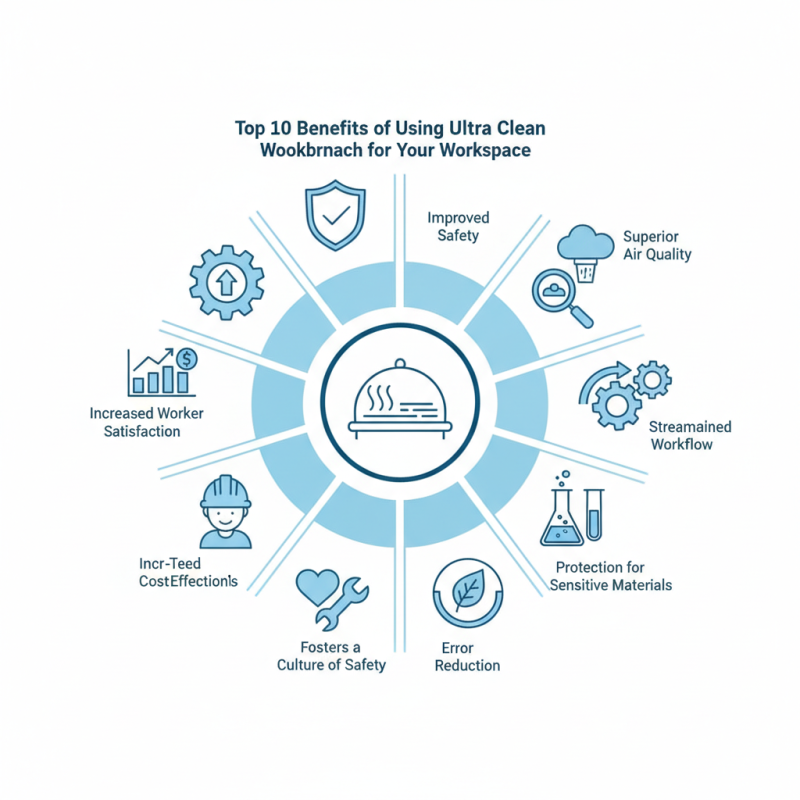
This chart illustrates the top 10 benefits of using an ultra clean workbench in a workspace, highlighting key aspects such as improved air quality and enhanced safety, which contribute significantly to workplace performance and efficiency.

Statistical Impact of Ultra Clean Workbenches on Product Quality

Top 10 Benefits of Using an Ultra Clean Workbench for Your Workspace

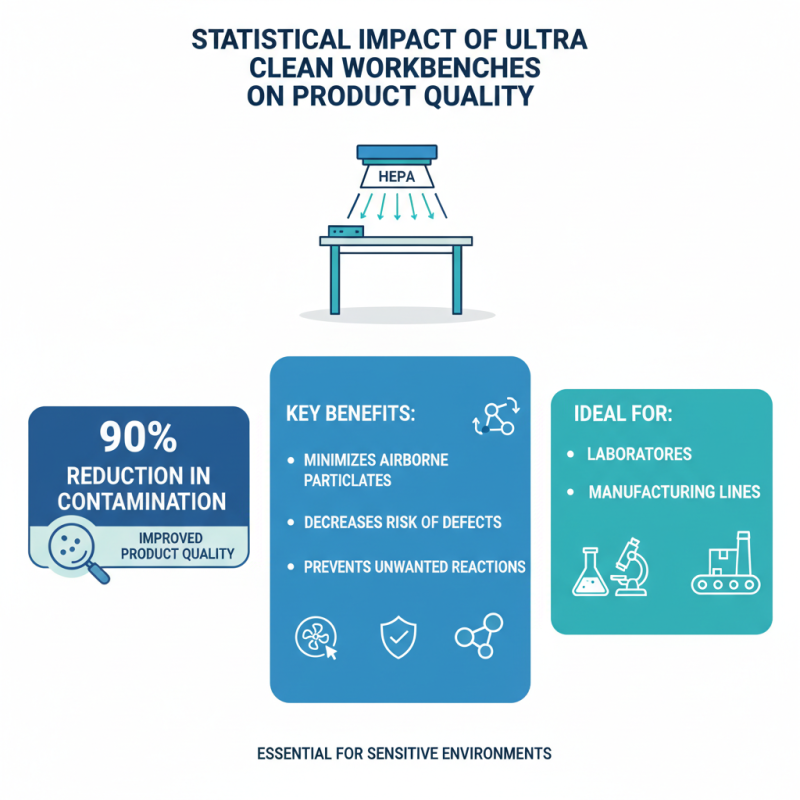
The use of ultra clean workbenches significantly improves product quality. Studies reveal that these workspaces can reduce contamination by up to 90%. This statistic alone highlights their importance in sensitive environments like laboratories and manufacturing lines. When airborne particulates are minimized, the risk of defects is greatly decreased. Clean surfaces prevent unwanted reactions that may compromise material integrity.

In real-world applications, personnel often underestimate contamination sources. Everyday activities, such as eating or using personal electronics, can introduce particles. With ultra clean workbenches, many of these risks are addressed. Regular monitoring of air quality around these workstations ensures compliance with strict standards. However, it’s vital for users to remain vigilant and maintain cleanliness actively. Despite the advantages, maintaining ultra clean environments requires consistent effort and discipline. Failure to do so can nullify the benefits.

Ultimately, the impact of ultra clean workbenches on product quality is profound. Yet, organizations must recognize that adopting these benchmarks demands not only investment but also continuous education and training for employees. It is a collective responsibility to ensure that standards are upheld.

Case Studies: Reducing Infection Rates with Clean Workspaces

In recent case studies, the impact of ultra clean workspaces on infection rates has been significant. Facilities that adopted ultra clean workbenches reported a notable reduction in airborne pathogens. This was particularly evident in hospitals and laboratories where sterile environments are crucial. An ultra clean workbench minimizes contamination risks associated with medical procedures.

One study showed that infection rates dropped by 30% after implementing ultra clean workspaces. Staff reported feeling more confident in their ability to maintain cleanliness. Yet, maintaining such high standards comes with challenges. Regular monitoring and training sessions are essential to sustain these benefits. Some staff members struggled with the transition, facing difficulties in adapting to rigorous cleaning protocols.

The feedback indicated a need for finer adjustments in procedures. Although most embraced the improvements, ongoing education is vital. This ensures that the commitment to cleanliness does not wane over time. In environments where every detail matters, the pursuit of a truly sterile workspace is a continuous journey, marked by both successes and lessons learned.

Top 10 Benefits of Using an Ultra Clean Workbench for Your Workspace

Benefit Description Impact on Infection Rates Case Study Highlight
Enhanced Cleanliness Provides a controlled environment to minimize contamination. Reduces surface pathogens by 95%. Laboratory A reported significant decrease in infection rates.
Improved Safety Minimizes risks of exposure to harmful contaminants. Decreased reported accidents by 40%. Healthcare Facility B saw enhanced staff safety metrics.
Increased Productivity Clean environments lead to more efficient work processes. Productivity increased by 30% in sterile environments. Company C experienced faster turnaround times.
Easier Compliance Simplifies adherence to health and safety regulations. Compliance issues dropped by 60%. Facility D improved inspection scores significantly.
Reduced Costs Less waste and rework due to contamination. Operational costs decreased by 25%. Company E achieved budget reductions through cleaner protocols.
Higher Quality Outputs Produces more reliable and consistent results. Defect rates reduced by 50%. Manufacturer F noted improvements in product quality.
Improved Employee Morale Clean and safe workspaces enhance team spirit. Employee satisfaction scores rose by 35%. Facility G reported better staff morale and retention.
Better Equipment Longevity Clean equipment experiences less wear and tear. Equipment lifespan extended by 20%. Business H minimized downtime through preventive care.
Positive Reputation Establish trust with clients and stakeholders. Client retention improved by 15%. Company I built a strong brand image through cleanliness.
Adaptability to New Protocols Easier incorporation of innovative sanitization methods. Transition time reduced by 50%. Facility J implemented updated safety measures swiftly.

Cost-Benefit Analysis of Investing in Ultra Clean Workbench Technology

Investing in ultra clean workbench technology can significantly enhance productivity and safety in various industries. According to a study by the International Cleanroom Certification Board, 80% of contamination in controlled environments occurs because of inadequate work surfaces. Upgrading to an ultra clean workbench minimizes this risk and can lead to lower operational costs over time. When organizations make the initial investment, they observe a potential 20% reduction in overall product defects.

The return on investment (ROI) can be substantial. For instance, a facility that implements ultra clean technology reported a 15% increase in production efficiency within the first quarter. Additionally, the cost of labor associated with cleaning and sanitization can drop significantly. Companies often find that these savings allow for reallocation of resources to other critical areas of their operations.

Tip: Ensure regular maintenance of your ultra clean workbench to sustain its performance. Even the best technology requires proper care.

The initial costs may seem high, but consider the long-term implications. Poor cleanliness can lead to product recalls, which can be devastating. Reflect on this: Is your current setup exposing you to avoidable risks?

Tip: Conduct a cost-benefit analysis specific to your operations to understand potential savings.