10 Best Anti Static Workbenches for a Safe and Efficient Workspace?
In today's electronic workspace, an Anti-Static Workbench is crucial for ensuring safety and efficiency. According to industry studies, nearly 30% of electronic failures stem from static electricity. This underlines the importance of a well-designed workspace. These workbenches help combat static buildup, which can damage sensitive components.
Additionally, a survey by the ESD Association indicates that over 70% of companies experience ESD-related issues. This not only leads to costly repairs but also impacts productivity. An Anti-Static Workbench creates a controlled environment, reducing the risk of electrical discharges.
Choosing the right workbench can be challenging. Many options lack adequate grounding or proper materials. A good quality Anti-Static Workbench must address these issues effectively. Finding a balance between cost and functionality is essential. Your workspace should not only prioritize safety but also foster efficiency in your operations.
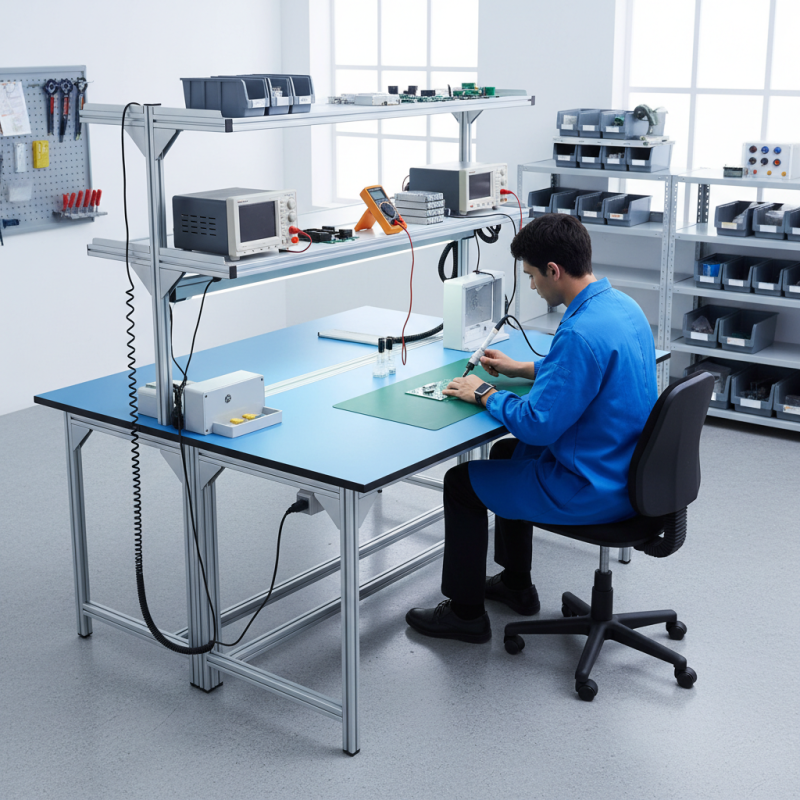
Benefits of Using Anti-Static Workbenches in Electronics Manufacturing
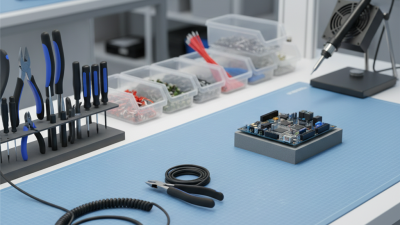
In electronics manufacturing, static electricity is a common enemy. It can damage sensitive components and disrupt production.
Anti-static workbenches provide a safe space to combat this issue. They help to dissipate static charges effectively, reducing the risk of equipment failure.
A report from the International Electrotechnical Commission indicates that static electricity costs the electronics industry over $5 billion annually.
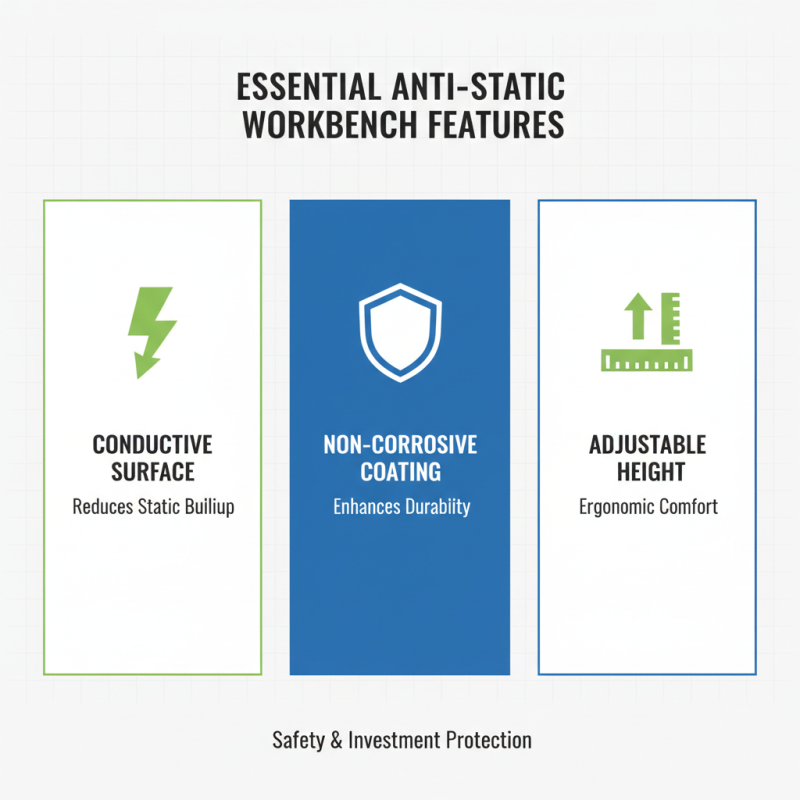
Choosing the right anti-static workbench can enhance workplace efficiency. Look for surfaces made from conductive materials.
Grounding systems should be integrated for maximum effectiveness. This can prevent static charge build-up, protecting valuable components.
Employees feel more secure working on these benches, leading to better productivity.
Tips: Regularly inspect your anti-static workbench for wear and tear. Maintenance is crucial.
Remember to use anti-static wrist straps when handling sensitive parts. A simple habit can prevent costly mistakes.
Inconsistent practices may lead to unintentional static build-up. Keep training sessions frequent to reinforce these practices.
Top Materials used in Constructing Durable Anti-Static Workbenches
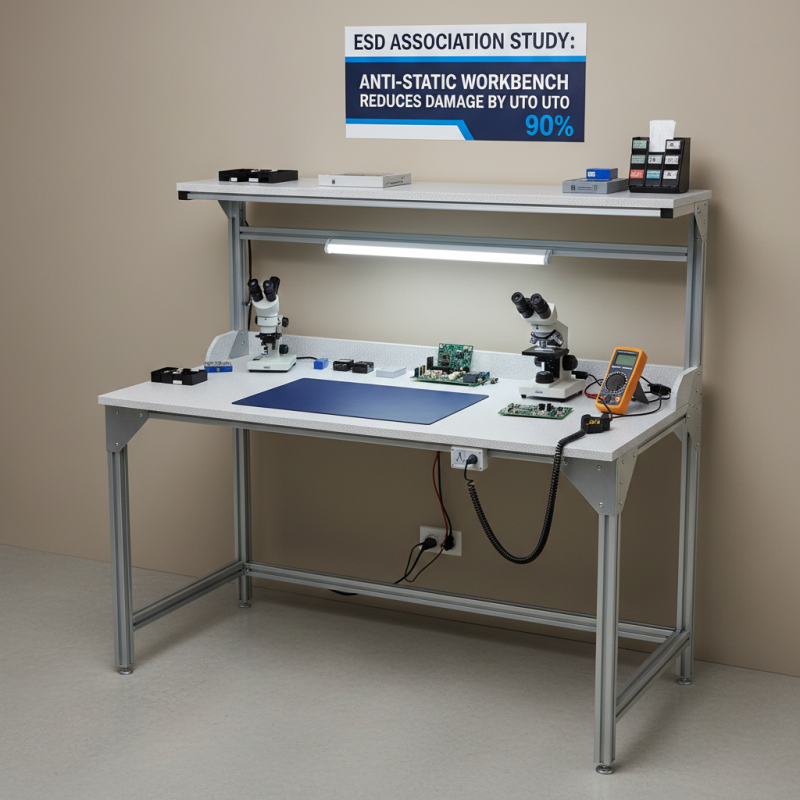
When it comes to building an effective anti-static workbench, the choice of materials is crucial. Materials like laminates, metal, and wood each play a significant role in creating a safe workspace. Laminates, for example, are non-conductive and can be made to divert static electricity. This makes them ideal for electronics work. According to a recent study by the ESD Association, a well-constructed anti-static workbench can reduce static-related damage by up to 90%.
Metal workbenches, on the other hand, are common in industrial settings. They offer durability and strength but require proper grounding to handle static electricity. A grounding system is vital; without it, users may experience shocks. Wood benches may seem simple, but they can be surprisingly effective. They are often treated with anti-static finishes, which provide a safe working surface. However, the effectiveness of wood benches can diminish over time and with wear.
Choosing the right material demands careful thought. There are pros and cons to each option. ESD environments might benefit from laminated surfaces, but they might not be as resilient as metal. Meanwhile, while wood provides some advantages, its longevity often raises concerns. Balancing these factors is essential for an efficient and safe workspace.
Industry Standards and Certifications for Anti-Static Workbenches
When selecting anti-static workbenches, industry standards play a crucial role. The two primary certifications are IEC 61340-5-1 and ANSI/ESD S20.20. The IEC standard outlines requirements for the design and use of facilities that handle static-sensitive devices. Meanwhile, ANSI/ESD S20.20 focuses on ensuring effective static control measures are in place. Both standards work together to ensure a safe environment.
According to a report by the ESD Association, improper handling of sensitive electronics can lead to significant failures. More than 30% of electronics damage cases are due to static electricity. Workstations that meet these standards often minimize this risk. Proper grounding, using ESD protective materials, and maintaining controlled environments are essential for compliance.
However, not all workplaces prioritize these standards. Many companies still overlook the importance of regular audits and employee training. This negligence can lead to costly production errors. Creating a culture of safety awareness is vital. Employees need to understand the risks associated with static electricity. Investing in training and ensuring standards are met can ultimately save companies money in the long run.
Cost Analysis: Investing in Quality Anti-Static Workbenches for Safety
Investing in quality anti-static workbenches is crucial for a safe workspace. The right workbench minimizes the risk of static electricity damaging sensitive equipment. These benches often include materials that dissipate static, ensuring a controlled environment. The initial cost might seem high, but the long-term benefits outweigh this.
Cost analysis shows that cheaper options may lead to higher costs down the line. You could face equipment failures or increased maintenance. It’s essential to consider durability along with price. A well-made workbench can last years, saving you money over time.
Reflection on the purchase process is necessary. A hasty decision could lead to regrets. Consider the size, features, and placement of the workbench. Thoughtful planning can enhance efficiency and safety in your workspace. Investing thoughtfully ensures a balance between safety and budget.
10 Best Anti Static Workbenches for a Safe and Efficient Workspace
| Model |
Dimensions (LxWxH) |
Weight Capacity |
Material |
Price ($) |
Rating (out of 5) |
| Workbench A |
60 x 30 x 36 inches |
1500 lbs |
Steel |
450 |
4.5 |
| Workbench B |
72 x 30 x 37 inches |
2000 lbs |
Aluminum |
550 |
4.7 |
| Workbench C |
48 x 24 x 34 inches |
1000 lbs |
Wood |
300 |
4.2 |
| Workbench D |
60 x 30 x 36 inches |
1200 lbs |
Composite |
400 |
4.4 |
| Workbench E |
72 x 30 x 36 inches |
1800 lbs |
Stainless Steel |
600 |
4.9 |
| Workbench F |
48 x 24 x 30 inches |
800 lbs |
Plastic |
250 |
4.0 |
| Workbench G |
60 x 30 x 36 inches |
1300 lbs |
Wood |
460 |
4.6 |
| Workbench H |
72 x 36 x 36 inches |
1600 lbs |
Steel |
575 |
4.8 |
| Workbench I |
48 x 24 x 32 inches |
900 lbs |
Aluminum |
320 |
4.3 |
| Workbench J |
60 x 30 x 36 inches |
1400 lbs |
Composite |
430 |
4.1 |