Top Biological Safety Cabinet Features Benefits and Uses?
Biological Safety Cabinets (BSCs) play a critical role in protecting laboratory personnel and the environment from hazardous biological agents. According to a report by Research and Markets, the global BSC market is expected to reach $1.24 billion by 2026, reflecting a growth rate driven by increasing safety regulations and the rise in biotechnology research. “Biological Safety Cabinets are essential for preventing contamination,” states Dr. Emily Hanson, a leading expert in laboratory safety. Her insight underscores the importance of these cabinets in modern labs.
BSCs offer various features that ensure a secure working environment. They provide filtered airflow and maintain a sterile workspace to suppress exposure to airborne pathogens. As biotechnological advancements surge, the demand for high-efficiency cabinets rises. Even so, some facilities still rely on outdated models, risking contamination and employee safety. The challenge lies in balancing technology upgrade costs with safety needs.
The importance of these cabinets cannot be overstated. While many labs have adopted newer models, some are lagging behind. This gap can compromise not only research validity but also the health of personnel. Investing in a Biological Safety Cabinet is not merely a regulatory requirement; it's a commitment to safety and research integrity.

Key Features of Biological Safety Cabinets for Lab Use
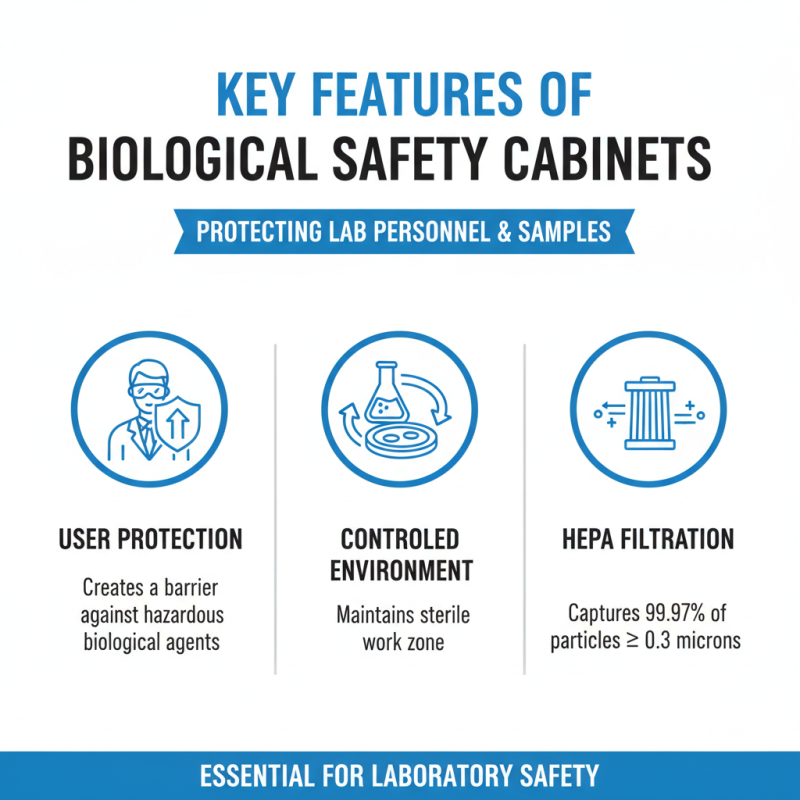
Biological safety cabinets (BSCs) are vital for laboratory safety. They provide a controlled environment that protects users from hazardous biological agents. The key features of BSCs ensure that they effectively filter contaminants. High-efficiency particulate air (HEPA) filters are essential. These filters capture particles as small as 0.3 microns with a 99.97% efficiency.
Another important aspect is airflow control. BSCs are designed to provide laminar airflow, creating a barrier between the lab worker and the biological materials. This flow minimizes the risk of exposure. The cabinets also have an interior sloped design, which aids in easy cleaning. A well-maintained cabinet ensures optimal performance and safety.
Users often overlook the importance of regular maintenance. Ignoring this can lead to reduced effectiveness. Training on proper use and understanding the limitations of BSCs are critical. Some users may assume that all biological hazards are contained. However, improper handling can lead to exposure. Recognizing these challenges helps labs enhance their safety protocols.
Importance of HEPA Filtration in Biological Safety Cabinets
Biological safety cabinets (BSCs) are vital in laboratories. They protect users, samples, and the environment. A key feature of these cabinets is HEPA filtration. HEPA, or High-Efficiency Particulate Air filters, capture over 99.97% of particles. This includes bacteria, viruses, and other hazardous materials. The importance of HEPA filtration cannot be overstated. It ensures that harmful substances are contained effectively.
Proper maintenance of HEPA filters is essential. Regular checks can help in identifying blockages. Clean filters improve airflow and effectiveness. Consider replacing filters annually or as needed. Use a certified professional for this task. Ensure that your BSC is functioning at optimal levels. Safety is critical in biological work.
Tips: Always wear appropriate PPE when working. This includes gloves and lab coats. Regular training on safety protocols is beneficial. Familiarize yourself with the cabinet's operation before use. Awareness can prevent accidents and ensure effective handling. Evaluate your workspace regularly for potential hazards.
Top Biological Safety Cabinet Features and Their Importance
This chart depicts the importance rating of various features found in biological safety cabinets, with a focus on HEPA filtration which is crucial for ensuring a sterile environment. The ranking is based on a scale of 1 to 10, highlighting the significance of each feature in laboratory settings.
Types of Biological Safety Cabinets and Their Specific Applications
Biological safety cabinets (BSCs) are essential for laboratories handling pathogens and biohazards. There are three main types: Class I, Class II, and Class III cabinets. Each serves distinct purposes and applications. Class I cabinets protect the operator and environment but not the specimen inside. They are ideal for work involving low to moderate risk pathogens. According to the CDC, these cabinets cover basic safety needs without specialized containment.
Class II cabinets are most popular. They provide protection to both the user and the samples. These cabinets have high-efficiency particulate air (HEPA) filters. They are ideal for microbiology, pharmaceutical, and clinical applications. A report from the National Institutes of Health states that over 60% of labs utilize Class II BSCs. These cabinets allow a sterile workspace while preventing contamination.
Class III cabinets offer the highest level of protection. They are completely sealed and provide a glove box setup for working with high-risk biological agents. These cabinets require rigorous maintenance and monitoring. A lack of awareness can lead to gaps in usage and compliance. Training staff on safe operation is crucial yet often overlooked. Understanding specific applications helps improve safety standards in research settings.
Benefits of Using Biological Safety Cabinets in Research Facilities
Biological safety cabinets (BSCs) play a crucial role in research facilities. They protect both users and the environment from potentially harmful biological agents. According to the Centers for Disease Control and Prevention (CDC), using BSCs can reduce the risk of exposure by over 99%. This statistic highlights their significance in maintaining laboratory safety standards.
In addition to safety, BSCs enhance research quality. They create a controlled environment that reduces contamination risks. Many laboratories reported improved experimental outcomes when utilizing BSCs. For instance, research shows that the use of Class II BSCs results in a 30% increase in reproducibility in cell culture work due to minimal airborne contaminants.
Despite their advantages, implementing BSCs is not without challenges. Regular maintenance and certification are necessary for optimal performance. Some facilities struggle with cost and space limitations when installing these units. Ongoing training for staff is essential, as improper use can negate the benefits. Finding the right balance between safety and practicality remains a key consideration for many research institutions.
Best Practices for Maintaining and Operating Biological Safety Cabinets
Maintaining and operating biological safety cabinets (BSCs) requires careful attention. Regularly scheduled maintenance is essential for optimal performance. This includes certification and testing by qualified personnel. Frequent checks on airflow and filter integrity ensure a sterile environment. A BSC that is not properly maintained can compromise safety protocols. Operators should be trained on proper usage techniques to maximize safety.
Cleaning protocols must be established and followed diligently. Use suitable disinfectants to wipe down surfaces after each session. Avoid using abrasive materials that can damage components. Operators should don appropriate personal protective equipment (PPE) before engaging with the BSC. Some users overlook this step, which reduces their protection. Training sessions can help reinforce these best practices.
Additionally, understanding the limitations of the BSC is crucial. It is not a perfect solution against all biological hazards. Some materials may require different safety measures. Operators should have a clear understanding of what can and cannot be handled within the cabinet. Familiarizing oneself with the user manual is often neglected, yet it greatly enhances competency. Engage in regular discussions within the team about safety concerns and experiences. These reflections help improve practices and foster a culture of safety awareness.