How to Choose the Right Centrifugal Fan for Your Needs?
Choosing the right centrifugal fan can significantly impact performance and efficiency. These fans serve various applications, from industrial processes to HVAC systems. A well-suited centrifugal fan ensures optimal air movement and energy savings.
When selecting a centrifugal fan, consider key factors like airflow requirements, pressure levels, and noise restrictions. Explore different sizes and blade designs. Each variation offers unique benefits. However, not every option will meet your specific needs. Assess your requirements carefully to avoid costly mistakes.
Consulting with industry experts can enhance your decision-making process. They provide invaluable insights and real-world experiences. Remember that an informed choice leads to improved operational efficiency. Selecting the wrong fan could result in underperformance or excessive energy consumption. Reflect on your system's needs to find the best centrifugal fan for your situation.
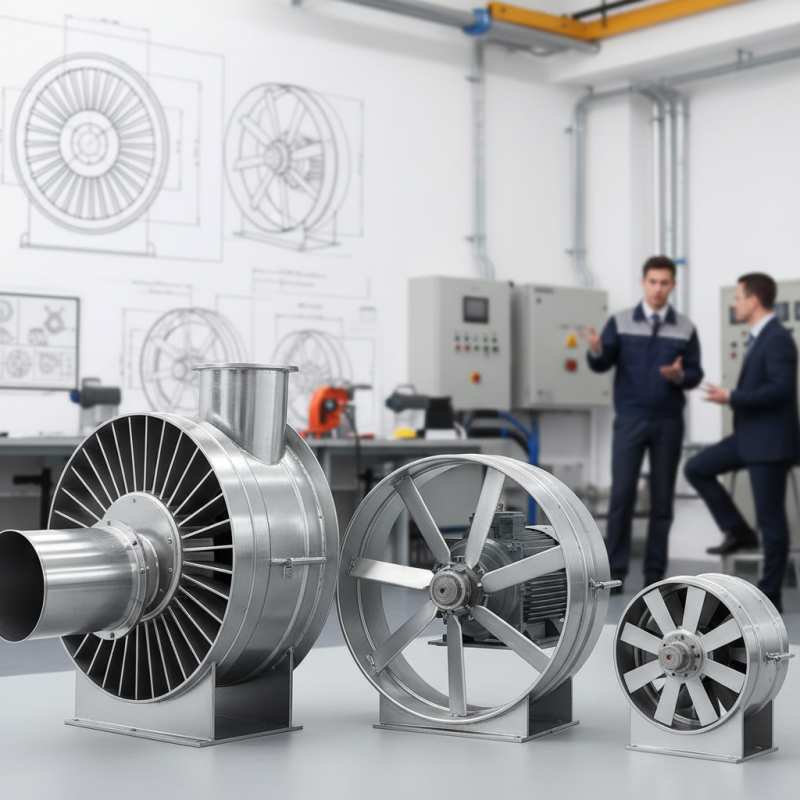
Understanding the Basics of Centrifugal Fans and Their Applications
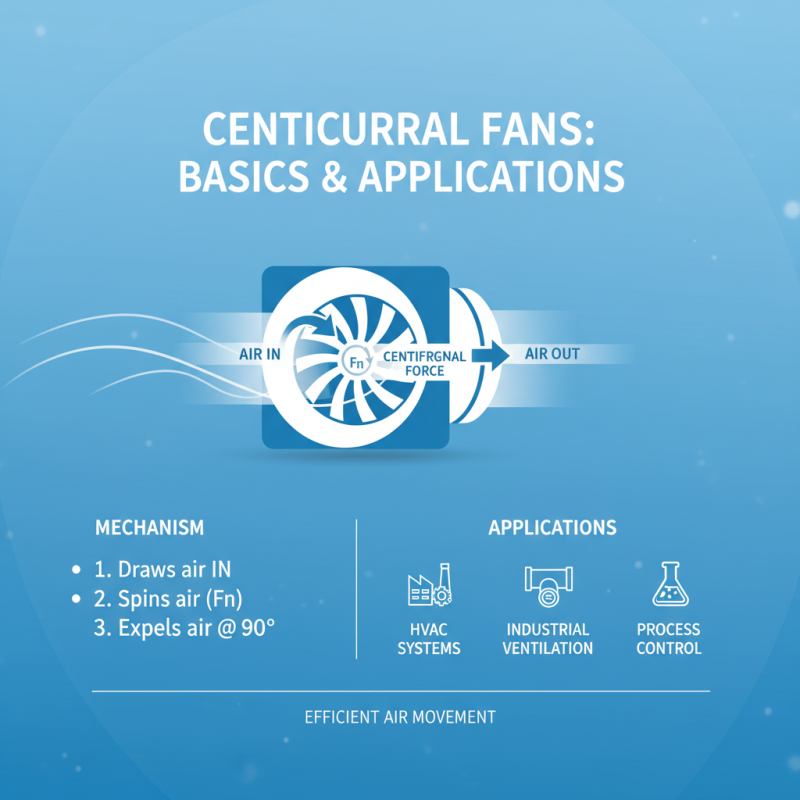
Centrifugal fans are essential in various applications, offering efficient air movement. They work based on the principle of centrifugal force, drawing air in and expelling it at a right angle. Understanding this basic mechanism can help you select the right fan for your specific needs.
When considering centrifugal fans, think about your application's requirements. Are you moving air for cooling, ventilation, or dust extraction? Each application demands different specifications. Pay attention to factors like airflow rate, pressure, and efficiency. Not all fans are suited for high-pressure systems, and overloading a fan can lead to performance issues.
Visualize a scenario where too weak of a fan fails to achieve desired airflow, leading to overheating in a machine. Alternatively, a fan that's too strong may create excessive noise or energy waste. This balance is crucial for optimal performance. Evaluating your ventilation setup critically can highlight areas needing improvement and inform your decision on the best centrifugal fan for your situation.
Factors to Consider When Selecting a Centrifugal Fan
When selecting a centrifugal fan, it is crucial to consider several key factors. The airflow capacity, typically measured in cubic feet per minute (CFM), directly impacts fan selection. Industrial applications often require higher CFM ratings, sometimes exceeding 10,000. Choosing the wrong airflow can lead to inefficient operation and wasted energy. A study by the American Society of Heating, Refrigerating and Air-Conditioning Engineers (ASHRAE) indicates that optimal airflow can improve system efficiency by 25%.
Another vital aspect is the static pressure the fan must overcome. This factor largely depends on duct design and overall system resistance. A fan that operates at insufficient static pressure will lead to inadequate performance. According to the European Ventilation Industry Association (EVIA), mismatched static pressure can reduce equipment lifespan by up to 30%. Assessing both dynamic and static conditions during installation is essential for longevity and energy savings.
Finally, consider the environment where the fan will operate. Temperature, humidity, and even surrounding debris can affect fan performance. For instance, a fan operating in high humidity may require specific materials resistant to corrosion. Industry standards suggest that nearly 20% of fans fail prematurely due to environmental factors. Gaining insights from reliable reports helps inform better decisions and reduces potential pitfalls.
Factors to Consider When Selecting a Centrifugal Fan
Evaluating Airflow Requirements for Your Specific Needs
When evaluating airflow requirements for your specific needs, it’s crucial to understand the details of your application. The airflow rate, measured in cubic feet per minute (CFM), should match the demands of the environment. High-performance applications may require more airflow, while smaller spaces may need less. It's essential to consider both the static pressure and velocity. These factors help determine if a fan can efficiently move air in your intended setup.
Each environment has unique characteristics. For instance, a dusty workshop may need a different fan than a quiet office. It's vital to assess any obstructions or restrictions in your space. Excessive bends in ducts or filters can inhibit airflow. Balancing the total airflow with the system’s resistance is often overlooked but very important.
Sometimes, users rely too heavily on specifications without considering practical tests. Seeking feedback from peers who have faced similar dilemmas can provide insight. Conducting airflow measurements might seem tedious but can reveal critical information about fan performance that specifications alone do not show. Reviewing past experiences and ensuring the fan’s airflow meets your diverse needs is where true expertise shines.
How to Choose the Right Centrifugal Fan for Your Needs?
| Fan Model |
Airflow (CFM) |
Static Pressure (in. wg) |
Motor Power (HP) |
Efficiency (%) |
| Model A |
1000 |
2.0 |
1.5 |
70 |
| Model B |
1500 |
2.5 |
2.0 |
75 |
| Model C |
2000 |
3.0 |
3.0 |
80 |
| Model D |
2500 |
4.0 |
4.0 |
85 |
Assessing Noise Level and Energy Efficiency in Fan Selection
When selecting a centrifugal fan, noise level and energy efficiency are critical factors. A recent industry report highlighted that fans account for up to 20% of electricity consumption in commercial buildings. Selecting a fan with high energy efficiency ratings reduces operational costs significantly, often by 30% or more. Quiet operation is equally essential, especially in settings like hospitals or libraries, where noise levels must be kept low.
Assessing the noise levels of centrifugal fans involves understanding the decibel ratings. Most fans operate between 50 to 70 decibels. However, even a few decibels can impact the environment. For instance, a fan operating at 60 decibels can sound twice as loud as one at 50 decibels. Investing time in fan selection helps meet specific acoustic requirements. Transitional noise may plague an installation. Balancing performance and silence can be a challenge when no single fan excels at both.
Energy efficiency often ties into noise levels, directly impacting fan performance. Fans that utilize advanced motor technology tend to deliver better energy savings while minimizing vibrations, which contributes to lower noise. It’s essential to review and choose products that undergo third-party testing. Ensure that noise and efficiency ratings align with your project goals. The process may require trial and error, demanding patience and thorough investigation of available options.
Exploring Popular Types of Centrifugal Fans for Various Uses
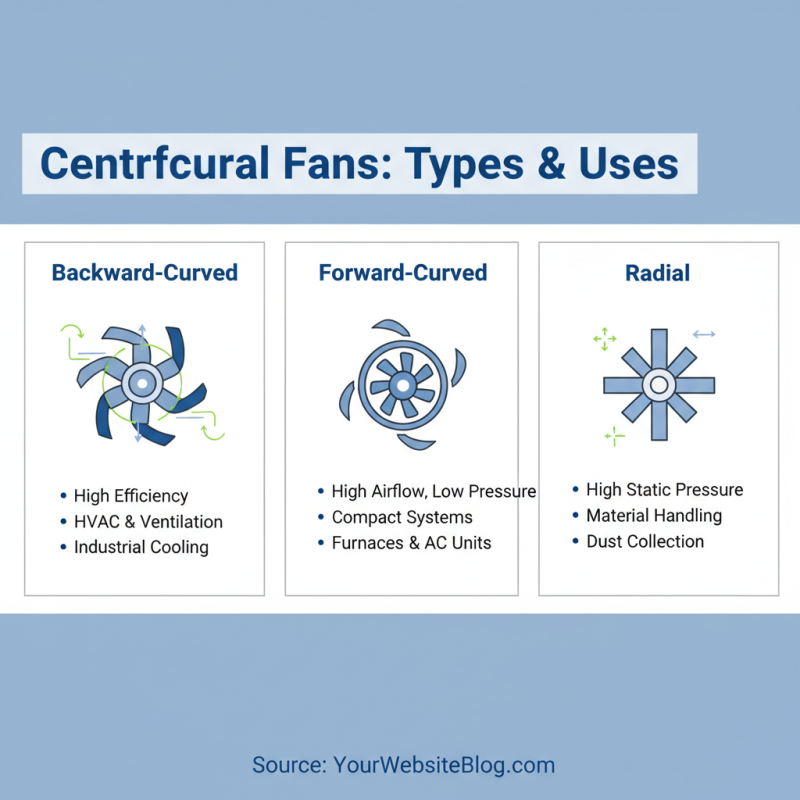
When selecting a centrifugal fan, understanding different types can streamline your decision-making. Common varieties include backward-curved, forward-curved, and radial fans. Each type serves specific applications, like ventilation, cooling, or material handling.
Backward-curved fans offer efficient airflow with minimal noise, making them ideal for commercial spaces. Forward-curved fans are compact and generate high airflow, often used in HVAC systems. Radial fans provide high pressure and are suitable for heavy-duty tasks, such as dust or fume extraction.
Tips: Evaluate the specific needs of your application. Are noise levels crucial? Consider backward-curved fans. Assess the space available; compact options may work better. Also, think about maintenance. Some fans are easier to clean than others. Choosing wisely ensures long-term reliability and efficiency in your workflow.