How to Choose the Right Centrifugal Fan for Your Needs?
Choosing the right Centrifugal Fan can be challenging. The market offers various options, each with unique specifications. According to the latest report from the Industrial Fans Association, centrifugal fans account for over 70% of industrial airflow applications. This statistic emphasizes their importance in various industries, including HVAC, manufacturing, and power generation.
Industry expert John Smith states, "Selecting the correct centrifugal fan can significantly impact system efficiency and energy usage." His words highlight a critical aspect often overlooked. Often, businesses choose fans based on price alone, disregarding performance and energy efficiency.
Understanding airflow needs, static pressure requirements, and system specifics is vital. For example, a fan that is too small may lead to inefficiencies. In contrast, an oversized fan can waste energy. Getting this choice wrong can result in higher operational costs and diminished performance.

Understanding the Basic Principles of Centrifugal Fans
Centrifugal fans are crucial in many industries. Understanding their basic principles helps in selecting the right one for your needs. These fans work by converting rotational energy into airflow. They pull air into the fan and then propel it outwards with force. This design makes them effective for various applications.
When choosing a centrifugal fan, consider airflow requirements. Different models provide varying flow rates. For instance, a typical industrial fan can vary from 100 to 50,000 CFM. In addition, pressure resistance is equally important. Many fans achieve pressures ranging from 0.5 to 10 inches of water gauge. Ensure your system's needs match these specifications.
Tip: Always assess your spatial constraints. Centrifugal fans can be optimized for compact spaces. It’s essential to also keep sound levels in mind. Not all fans operate quietly. Some exceed acceptable noise levels. Choose wisely to avoid future inconveniences.
Key considerations include the fan wheel size. Larger wheels move more air but could take up more space. Also, motor efficiency impacts performance and energy consumption. Investing in an energy-efficient motor may reduce long-term operational costs. Reflect on these variables to make an informed choice.
Identifying Your Specific Application Requirements
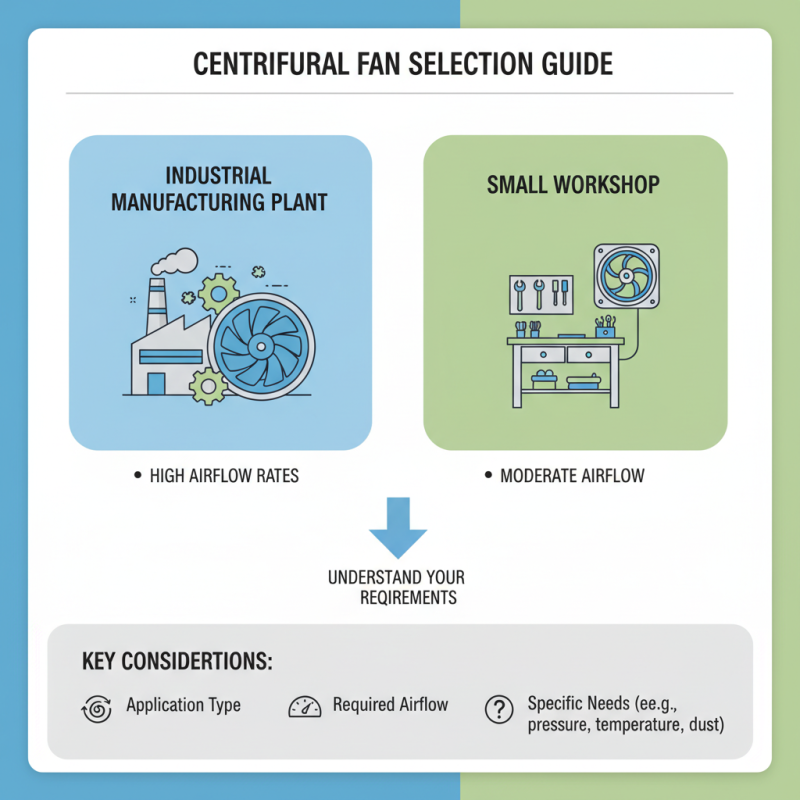
Choosing the right centrifugal fan begins with understanding your specific application requirements. Different industries have unique needs. For instance, a manufacturing plant may require high airflow rates. Alternatively, a small workshop may only need moderate airflow. Knowing your requirements helps narrow down options.
Consider the environment where the fan will be used. Is it a dusty area? Moisture levels can significantly affect performance. You might need a fan with protective features. Additionally, think about the necessary noise levels. Some applications cannot tolerate excessive noise. Balancing these factors is crucial for effective operation.
Also, take into account the operating conditions. Temperature and exhaust requirements can guide your decision. Pay attention to the fan's efficiency ratings. An energy-efficient model may save costs in the long run. However, it’s essential to evaluate if these models meet all your needs. Ignoring specific requirements can lead to poor performance. Being thorough in this step is vital to success.
Evaluating Key Performance Specifications for Centrifugal Fans
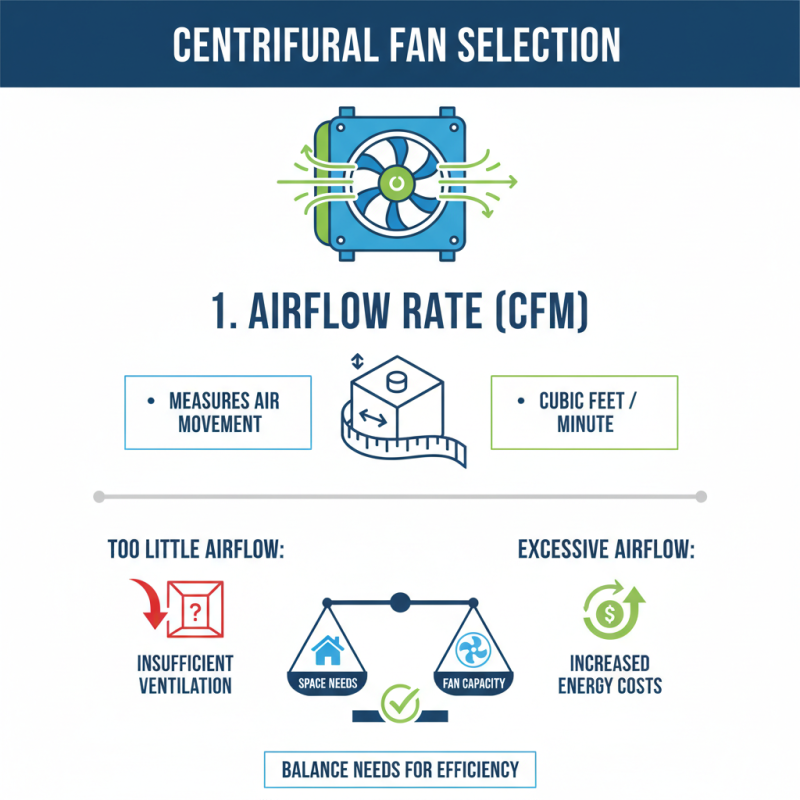
When selecting a centrifugal fan, the performance specifications are crucial. Consider air flow rate first. This measurement determines how much air the fan can move. It’s expressed in cubic feet per minute (CFM). Evaluate your needs based on the space you have. Too little air flow can lead to insufficient ventilation. Conversely, excessive flow might increase energy costs.
Next, assess the static pressure. This indicates how well the fan can overcome resistance in the system. If your ductwork is complex, ensuring the fan meets this requirement is essential. High static pressure can be overkill for simple systems. Yet, failing to account for it might result in weak airflow.
Noise levels are also vital. Fans run differently, and noise can be an issue. Some fans operate quietly, while others produce significant sound. Consider your environment. In a quiet area, a noisy fan could be problematic. Lastly, look at the efficiency rating. An efficient fan saves energy and reduces costs. Look for specifications that strike a balance between power and consumption.
Comparing Different Types of Centrifugal Fans on the Market
When selecting a centrifugal fan, understanding the types available is crucial. Different designs serve various purposes. Some fans are optimized for high pressure, while others focus on high volume. It's essential to define your needs before making a choice.
One common type is the backward-inclined fan, known for its efficiency. It handles dust and debris well. Some users report challenges with noise levels. This type may not suit every environment. Another popular choice is the forward-curved fan. It's compact and easy to install. However, it can struggle in high-pressure applications.
Tips: Know your airflow requirements. Also, consider the space where the fan will operate. Dimensions matter. If room is tight, a smaller fan may be necessary. Don't ignore energy efficiency. Higher initial costs often save money long-term. Think about maintenance. A fan that’s hard to access may cause issues down the line.
Comparison of Different Types of Centrifugal Fans
Maintenance Considerations for Optimal Fan Performance
Centrifugal fans are essential for various industrial applications. Proper maintenance greatly influences their performance and longevity. According to the American Society of Heating, Refrigerating and Air-Conditioning Engineers, improper maintenance can reduce fan efficiency by up to 25%. Regular inspections can prevent this.
Cleaning the blades and interior regularly helps maintain airflow. Dust and debris can accumulate, causing imbalance. Imbalance leads to excessive wear on bearings and motors. The National Institute for Occupational Safety and Health suggests that regular checks every six months can mitigate these issues. Checking vibration levels periodically is also crucial. Significant vibrations can indicate misalignment.
Lubrication of moving parts is often neglected. Insufficient lubrication can cause overheating and failure. Comfortably warm bearings are acceptable, but excessive heat can signal problems. Tracking operating temperatures could prevent unexpected failures. Moreover, reviewing fan performance statistics periodically helps identify trends. If performance decreases, it’s time to act. This proactive approach can save costs associated with downtime and repairs.