Leave Your Message

How to Choose the Right Sky Platform?

Choosing the right Sky Platform begins with the work, not the machine. Consider the required height, reach, load, surface, and available space. A narrow aisle may call for a compact lift; uneven ground can demand a rough-terrain model. Small mismatches matter. A platform that reaches the work but cannot fit through the access route is not the right choice.

Safety data adds perspective. The U.S. Bureau of Labor Statistics reported 885 fatal work injuries involving falls, slips, and trips in 2023, across all industries and circumstances. This figure is not specific to Sky Platform use, but it underscores why access planning deserves careful attention. The International Powered Access Federation (IPAF) also publishes annual Global Safety Reports on powered-access incidents. Review current guidance, and compare equipment specifications with the actual site conditions.

IPAF Chief Executive Peter Douglas has emphasized the importance of planning, training, and responsible equipment use. That principle is useful, but it cannot replace a site-specific assessment. Check the platform’s working height, outreach, rated capacity, power source, and ground pressure. Confirm operator training and inspection requirements with the manufacturer and a qualified rental provider. Then ask one practical question: can the crew position, operate, and exit the platform safely? No checklist catches every surprise. Mud, overhead obstructions, and a shifting work area can change the decision. Choose carefully, and reassess when conditions change.
How to Choose the Right Sky Platform?

Define the Task and Work Environment

Choosing a sky platform starts with the work, not the maximum height listed on a specification sheet. Record the actual task: fitting a light, inspecting a beam, or carrying tools between work points. Note the working height, horizontal reach, time needed, and weight of workers, tools, and materials. A platform that reaches the ceiling may still leave the worker leaning sideways. That is a poor trade. Check doorway width, floor slope, surface strength, overhead obstructions, and nearby electrical hazards before deciding how the machine will enter and move around the site. Details matter.

The U.S. Bureau of Labor Statistics reported 865 fatal work injuries from falls, slips, and trips in 2022. That figure covers many types of work; it does not measure platform-related incidents alone. Still, it underlines why the ground and access route deserve close attention. For indoor maintenance, measure narrow aisles and check whether the floor can support the equipment. Outdoors, consider soft ground, gradients, and changing weather. A planning worksheet can miss a cable tray or a floor drain, so verify the route in person when possible. Recheck the plan if the task changes. Small changes can matter.


How to Choose the Right Sky Platform? — Define the Task and Work Environment

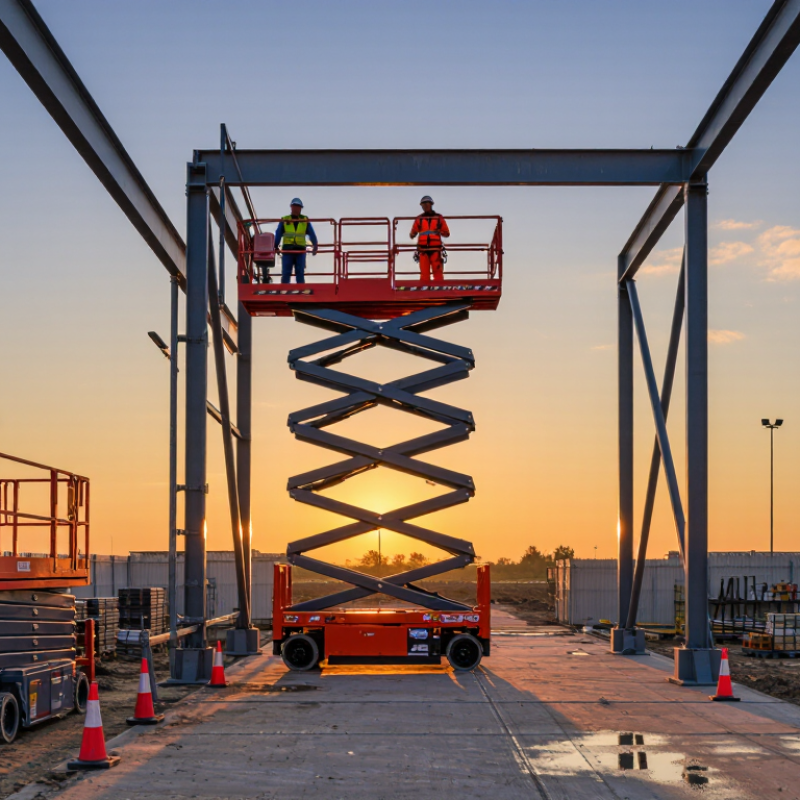
Start with the required working height and access path. A vertical mast or scissor lift can suit work directly above a clear, level area; a boom lift can reach over or around obstacles. Check the surface, indoor or outdoor conditions, platform capacity, and access restrictions before choosing.

Indicative working-height ranges in metres; actual ranges vary by model. Working height is generally the platform height plus an assumed operator reach, so verify specifications for the equipment being considered.

Compare Sky Platform Types and Access Methods

A sky platform’s working height is only part of the choice. Scissor lifts rise vertically and suit level floors, indoor maintenance, and loads shared by several workers. Boom lifts reach over obstacles, but their outreach needs more clearance and careful positioning. Mast lifts fit narrow aisles, though their small decks limit tools and materials. Check floor strength, doorway width, overhead hazards, and the platform’s rated capacity before choosing.

Access method matters just as much. A fixed ladder or stair tower may suit a regular, stationary work area; a mobile elevating work platform can move workers between changing tasks. Powered access requires trained operators, pre-use checks, and a clear rescue plan. The U.S. Bureau of Labor Statistics reported 885 fatal work injuries involving falls, slips, and trips in 2023; this figure covers many work settings, not platforms alone. IPAF’s Global Safety Report also tracks powered-access incidents, reinforcing the need to assess site-specific hazards. Reach matters. A simple rule can fail: the tallest lift is not automatically the safest. Measure the route, consider ground conditions, and verify access with the people doing the work.

Assess Working Height, Reach, Capacity, and Terrain

How to Choose the Right Sky Platform?

Assess Working Height, Reach, Capacity, and Terrain

Choosing a sky platform starts with the task, not the tallest machine available. Measure the actual working height, including the operator’s reach, and check how the supplier defines that figure. Platform height and working height are not the same. A ceiling fixture several metres above a crowded floor may need more reach than an open-wall job. Measure the farthest point too; horizontal reach matters when obstacles block direct access. Small margins matter.

Check the platform’s rated capacity against the operator, tools, and materials carried together. A tool bag and a box of fittings add weight quickly. Do not treat the maximum rating as a target; leave room for the real load and follow the equipment instructions. It is easy to overlook small items when planning, and estimates can be wrong, so verify the load before work begins.

Terrain can narrow your options. Look for soft ground, floor drains, ramps, and uneven paving along the route, not just beneath the work area. A compact unit may fit through a doorway but still be unsuitable for a sloped surface. Confirm the machine’s permitted ground conditions and leveling limits in its operating guidance. If access or measurements are uncertain, pause and recheck the site rather than relying on a guess.

Review Safety Features and Regulatory Requirements

How to Choose the Right Sky Platform?

Review Safety Features and Regulatory Requirements

A sky platform should suit the work height, reach, and ground conditions—not just the job description. Check the platform’s rated capacity against the combined weight of workers, tools, and materials. A compact unit may fit through a narrow doorway, but it still needs firm, level ground. Look for guardrails, an emergency-lowering system, clear controls, and an accessible emergency stop. Small details matter. Before use, inspect tires, controls, platform gates, and visible hydraulic lines. A quick glance is not a full inspection, even when the machine looks clean.

Regulatory requirements vary by location and platform type. Confirm which operator training, site procedures, and inspections apply before work begins. Read the manufacturer’s operating instructions and keep required records available to the crew. Some rules depend on the task or workplace, so assumptions can leave important gaps. If requirements are unclear, ask a qualified safety professional or the relevant local authority. Check whether the work area contains overhead obstructions, power lines, or uneven surfaces, and follow applicable clearance rules.

During setup, test the controls in a safe area and make sure workers know how to lower the platform in an emergency. Keep the platform within its load limit, and never use extra objects to gain height. It is easy to overlook a small slope when attention is on the work above. Recheck conditions when the job changes, especially after moving the unit or adding equipment.

How to Choose the Right Sky Platform? - Review Safety Features and Regulatory Requirements

Selection factor What to review Why it matters Safety or regulatory check Practical buyer action
Platform type Scissor lifts provide mainly vertical access; boom lifts can reach up and over obstacles; vertical-mast lifts suit compact work areas. Choosing the wrong configuration can create unnecessary reach, access, or stability risks. Check the machine’s intended use, operating instructions, and site conditions. Do not use a platform as a crane or material hoist unless it is specifically designed and approved for that purpose. Map the work area, access route, required horizontal reach, and overhead obstructions before selecting a type.
Working height and outreach Compare the required work height and horizontal reach with the machine’s rated specifications. Maximum height and outreach depend on the model, configuration, and operating conditions; they are not interchangeable ratings. Use the manufacturer’s operating instructions and capacity or reach information. Never exceed rated limits or position the machine beyond its permitted operating envelope. Confirm that the platform can reach the work position without standing on guardrails, using ladders, or leaning outside the platform.
Rated capacity Check the rated load and account for occupants, tools, and materials together. Overloading can compromise stability and safe operation. Follow the platform’s capacity marking and any configuration-specific limits. Distribute loads as directed by the manufacturer. Estimate the total load before work begins and confirm that the selected machine has adequate rated capacity.
Ground and surface conditions Assess slope, surface strength, holes, debris, overhead hazards, and travel path. Uneven, weak, or obstructed ground can affect stability and increase the risk of collision or overturning. Operate only within the machine’s stated slope and surface limits. Use stabilizers or outriggers only as specified for the equipment and site. Inspect the route and work area; arrange ground assessment or protection where surface strength is uncertain.
Fall protection and guardrails Check guardrails, gates, anchor points, and any personal fall-protection requirements for the platform type. Guardrails and correct fall-protection practices help reduce the risk of falls or ejection. In the United States, OSHA construction rules for aerial lifts address fall protection, including attachment of a lanyard to the boom or basket when required. Follow the applicable rule, equipment instructions, and site policy. Verify the required fall-protection method for the specific lift and jurisdiction; never climb or sit on guardrails.
Emergency controls and rescue Confirm ground controls, emergency stop, and emergency lowering systems are accessible and functioning. A worker may need to be lowered safely if the platform controls fail or the operator becomes incapacitated. Operating instructions should explain emergency procedures. Operators and ground personnel should know how to use the applicable controls. Before work, identify who can perform an emergency lowering and how to contact site support.
Pre-use inspection and maintenance Inspect controls, brakes, tires, guardrails, alarms, hydraulic components, and visible structural damage. A defect can affect safe movement, elevation, or emergency response. OSHA construction requirements include checking lift controls before use. Follow the manufacturer’s inspection schedule and applicable workplace rules; remove unsafe equipment from service. Keep inspection records and report defects before the lift is operated.
Operator training Check that operators are trained for the equipment type and familiar with its controls, limits, and hazards. Training helps operators recognize site-specific risks and use the lift as intended. Applicable requirements vary by jurisdiction. In the United States, OSHA rules require appropriate instruction for aerial-lift operators; ANSI/SAIA A92 standards address safe use and training. Request evidence of relevant training and arrange equipment-specific familiarization before operation.
Applicable standards and conformity Identify the country or region where the lift will be used and confirm the applicable design, safe-use, and workplace requirements. Legal obligations, conformity markings, and inspection rules differ across jurisdictions. Examples include OSHA regulations and ANSI/SAIA A92 standards in the United States, and EN 280 and applicable work-equipment legislation in the European Union. Confirm current local requirements. Ask for the correct manuals, conformity documentation, inspection history, and local compliance information for the specific machine.

Note: Requirements vary by equipment type, workplace, and jurisdiction. Use this table as a planning guide and verify current local regulations and the machine manufacturer’s instructions before operation.

Compare Operating Costs, Maintenance, and Support

A sky platform’s purchase price is only one part of its operating cost. Compare energy or fuel use, delivery charges, operator training, and expected hours of use. A unit working indoors on smooth floors may have different costs from one used outdoors on uneven ground. Small details matter. Ask for a cost estimate based on your actual shifts, load, and working height, not a best-case example.

Maintenance can change the economics quickly. Check inspection intervals, service labor rates, replacement-part availability, and warranty exclusions. Ask what routine tasks your team can handle safely, and what requires a qualified technician. Downtime costs money. A platform that needs frequent service may cost more than its purchase price suggests. Still, estimates are imperfect; dust, weather, and usage habits can shift the numbers.

Support matters when a platform stops mid-job. Compare response times, service coverage, loan-unit options, and access to troubleshooting help. Ask who answers after hours and how quickly common parts can arrive. Request these details in writing. A polished service promise sounds reassuring, but clear terms are more useful. Before choosing, compare the expected yearly cost alongside maintenance records and support commitments.