Leave Your Message

Top 10 Spray Tower Manufacturers for Global Buyers

Choosing a Spray Tower manufacturer is an engineering decision, not just a price comparison. These systems can cool gas, absorb soluble pollutants, or capture particles, but performance depends on the duty and design. A tower shown in a product brochure may look suitable. The operating details matter more.

Technical references help buyers ask better questions. The U.S. EPA’s Air Pollution Control Cost Manual discusses wet-scrubber design and cost factors, including gas flow, pressure drop, and liquid use. The European Commission Joint Research Centre’s 2022 Best Available Techniques Reference Document for Common Waste Gas Management and Treatment Systems in the Chemical Sector compares treatment approaches and operating considerations. Together, these sources point to practical checks: inlet conditions, target removal efficiency, materials compatibility, water management, and maintenance access. Requesting a performance basis is sensible. A guarantee without stated test conditions is hard to compare.

This Top 10 guide is intended to help global buyers screen manufacturers, not declare one universal winner. Compare project experience, engineering support, fabrication capabilities, reference installations, and documentation. Ask how suppliers handle corrosion, nozzle inspection, and changing gas loads. Small details matter. A low purchase price can become costly if cleaning is difficult or spare parts take weeks to arrive. And specifications can still miss the realities of a particular plant. Use the shortlist as a starting point, then verify each claim against your process data and the supplier’s technical documents.

Top 10 Spray Tower Manufacturers for Global Buyers

What Spray Towers Are and How They Work

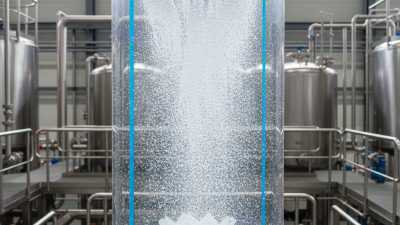
A spray tower is a vertical vessel that brings a gas stream into contact with liquid droplets. Gas usually enters near the bottom and rises, while spray nozzles send liquid downward. This countercurrent flow creates contact between the two streams. Simple in principle. A pump feeds water or a selected scrubbing solution to the nozzles, which break the liquid into droplets. Soluble gases can transfer into the liquid, while some particles are captured by droplets and carried away. The liquid drains into a sump for recirculation, treatment, or replacement. An outlet mist eliminator can catch entrained droplets before the gas exits.

Because a spray tower has no packed bed, its open interior can resist plugging in some dusty services. That is not a universal advantage. Fine droplets offer more contact area but may increase mist carryover; larger droplets can reduce transfer efficiency.

Designers consider nozzle type, liquid flow, tower height, gas velocity, and the properties of the contaminant. Operating conditions matter too. Changes in pH, temperature, or liquid concentration can affect removal performance.

A clear-looking outlet does not prove the tower is working well; sampling and operating records provide better evidence. Real equipment is less tidy than a diagram, and performance depends on maintenance as well as design.

Applications and Main Types of Spray Towers

Spray towers are used to cool hot gas, humidify process air, and absorb selected soluble gases. They also capture some dust and liquid droplets. Inside the vessel, nozzles break liquid into sprays that meet the moving gas. A plant operator might inspect nozzle patterns, pressure readings, and drain lines during routine checks. Small details matter.

The main configurations describe how gas and liquid travel. In counter-current towers, gas rises as liquid falls, creating a strong concentration gradient for absorption. Co-current designs move both streams in the same direction and can suit rapid cooling or temperature-sensitive processes. Cross-flow towers send the streams across one another, which may help fit certain layouts. No arrangement is best for every duty.

Open spray towers have few internal obstructions and often produce a relatively low pressure drop. That can be useful when handling gas streams with suspended solids. But their contact area is limited compared with some packed systems, and coarse sprays may miss fine particles. This trade-off is easy to underestimate. Selection should consider gas flow, liquid chemistry, temperature, droplet size, and maintenance access. A tower that looks simple on a drawing can still perform poorly if nozzles clog or liquid distribution becomes uneven.

Top 10 Spray Tower Manufacturers for Global Buyers - Applications and Main Types of Spray Towers

Company and brand names are intentionally omitted. The entries below compare ten commonly specified spray-tower and related wet-scrubbing configurations; they are not a ranking of individual manufacturers. Suitability depends on the gas composition, liquid chemistry, operating conditions, and local requirements.

No. Configuration How it works Typical applications Key selection points
1 Open spray tower Liquid is distributed through spray nozzles into an open vessel, contacting the rising or cross-flowing gas. Gas quenching, dust suppression, and absorption of readily soluble gases. Relatively simple internals and low gas-side pressure drop; fine-particle capture may require additional stages or equipment.
2 Countercurrent spray tower Gas flows upward while scrubbing liquid droplets move downward, creating countercurrent contact. Acid-gas absorption and general-purpose wet gas treatment. Check gas velocity, droplet carryover, liquid-to-gas ratio, and whether a mist eliminator is needed.
3 Cross-flow spray tower Gas passes horizontally across one or more spray zones while liquid is sprayed through the gas stream. Industrial exhaust treatment where a horizontal gas path suits the plant layout. Review footprint, liquid distribution, drainage, and access for nozzle maintenance.
4 Quench spray tower A spray rapidly cools hot gas, often by evaporative cooling, before downstream treatment. Hot process gas conditioning, incineration exhaust, and protection of downstream equipment. Specify inlet temperature, gas flow, liquid quality, evaporation duty, and materials for thermal and chemical exposure.
5 Two-stage spray scrubber Separate spray zones or circuits provide sequential contact, with stage conditions tailored to the process. Processes requiring staged cooling, particulate removal, or gas absorption. Confirm the purpose of each stage, recirculation arrangement, and space for separation or demisting between stages.
6 Recirculating-liquid spray tower A pump returns collected scrubbing liquid to the spray headers; makeup and blowdown manage liquid inventory and dissolved contaminants. Continuous-duty scrubbing where liquid reuse is practical. Assess pump redundancy, solids handling, bleed-and-feed needs, water treatment, and corrosion control.
7 Spray tower with mist eliminator A vane or mesh-type separator removes entrained liquid droplets from treated gas downstream of the spray zone. Wet scrubbing systems where liquid carryover must be limited before a fan, stack, or next process step. Select for expected droplet loading and fouling risk; provide suitable drainage and cleaning access.
8 Spray tower with packing Sprays wet a structured or random packing bed, increasing gas–liquid contact area. This is generally classified as a packed-bed scrubber. Absorption duties needing more contact area than an open spray zone can provide. Packing can increase pressure drop and may be vulnerable to plugging; check solids, scaling, and cleaning requirements.
9 Venturi scrubber with spray section A high-velocity gas stream atomizes liquid in a constricted throat; a downstream separator collects droplets and particles. It is a related wet-scrubber design, not a conventional open spray tower. Fine particulate control and applications needing intensive gas–liquid mixing. Typically involves higher pressure drop and energy use than a simple spray tower; evaluate erosion and liquid separation.
10 Corrosion-resistant spray tower The vessel and wetted components use materials selected for the specific gas, liquid chemistry, temperature, and mechanical conditions. Acidic, alkaline, saline, or otherwise corrosive exhaust-treatment services. Possible material choices include suitable thermoplastics, FRP, or corrosion-resistant alloys; compatibility must be verified for the actual service.

Procurement note: request performance guarantees against defined inlet conditions and target outlet limits. Confirm design flow range, pressure drop, reagent and water consumption, materials, emissions requirements, inspection access, and applicable local codes with the equipment supplier.

Criteria for Comparing Global Spray Tower Manufacturers

Comparing global spray tower manufacturers starts with the process, not the brochure. Share the expected gas flow, inlet temperature, dust or soluble-gas load, and scrubbing-liquid chemistry. A credible proposal should state its design assumptions and explain how tower diameter, spray stages, and droplet contact support the target performance. Ask for calculation notes, material specifications, and relevant test records. Ask for evidence.

Materials deserve close attention. A tower exposed to warm, acidic liquid may need different lining and nozzle materials from one handling a mild aqueous stream. Request details on corrosion allowances, inspection access, and how nozzles can be checked or replaced. Pressure drop and pump demand matter too; small differences can affect operating costs over years. A neat datasheet can still leave these details unclear.

Compare manufacturers on quality controls, delivery planning, commissioning support, and access to replacement parts. Clarify whether performance figures come from testing, simulation, or similar operating installations. References are useful when the process conditions are genuinely comparable. Check documentation quality as well: clear drawings and maintenance instructions help teams work across languages and shifts. No scorecard is perfect. Plant conditions change, and buyers may not know every future operating issue. Record uncertainties, ask suppliers to address them, and avoid treating the lowest quoted price as the full cost.

Top 10 Spray Tower Manufacturers for Global Buyers

For global buyers comparing the top 10 spray tower manufacturers, the strongest candidates explain how their design fits a specific process. Ask about gas flow, liquid distribution, pressure drop, and target removal efficiency. A clear process basis matters more than a glossy capacity claim. Ask for evidence. Request drawings, material specifications, and test data tied to comparable operating conditions.

Look closely at construction details. Nozzle access, inspection ports, drain placement, and corrosion allowances affect daily operation. Check whether the manufacturer can support local installation, spare parts, and operator training. A tower may perform well in a factory test but behave differently with changing gas loads or uneven liquid flow. That matters. Compare guarantees carefully, including what measurements define successful performance and who verifies them.

For international projects, confirm delivery scope, documentation, communication practices, and after-sales response times before signing. Request references from facilities with similar temperatures, contaminants, and throughput. One weakness in many comparisons is an overreliance on price and rated capacity. Those figures rarely show maintenance effort. Even careful buyers can miss small details, such as nozzle replacement clearance or access for cleaning. It is worth asking again.

Top 10 Spray Tower Manufacturers for Global Buyers

Smaller droplets provide more liquid surface area for gas-liquid contact. Values are calculated from the spherical-droplet formula surface area ÷ volume = 6 ÷ droplet diameter; they are theoretical geometric values, not manufacturer performance data. Actual tower performance also depends on factors such as liquid-to-gas ratio, residence time, and pollutant properties.

How to Choose a Manufacturer for Your Project

Choosing a spray tower manufacturer starts with the process, not the catalog. Define gas flow, temperature, pressure, dust load, and liquid chemistry before comparing proposals. A tower handling acidic mist may need different materials and nozzle arrangements from one treating warm, dusty exhaust. Small details matter. Share operating ranges, including unusual shutdown or startup conditions. Missing these can lead to a design that works on paper but struggles on site.

Ask how the manufacturer selected tower diameter, spray coverage, and droplet size. Request calculations, material specifications, and drawings that show access for inspection and nozzle removal. If performance depends on a narrow operating range, ask what happens when flow changes. A clear answer should include assumptions, test methods, and measurable limits. Ask for references from projects with similar process conditions, not merely similar tower dimensions. Past results help, but they do not guarantee yours.

Fabrication quality and after-sales support deserve equal attention. Check weld inspection records, component traceability, delivery schedules, and the availability of replacement nozzles or pumps. Clarify who handles commissioning and what data will confirm performance. A pilot test can reduce uncertainty, though it adds cost and time. No checklist predicts every field condition; even a careful review may miss a change in feed composition. Record open questions before signing, and make responsibility for unresolved assumptions explicit.