7 Spray Tower Buying Tips for Global Buyers
Choosing a Spray Tower for an industrial project is not just a matter of comparing prices. The right unit must suit the gas stream, process conditions, available space, and daily operating demands. A tower that looks adequate on a datasheet may perform poorly if assumptions about inlet temperature, dust loading, liquid flow, or pressure drop are wrong. Details matter. Buyers should ask how the supplier developed its design figures, what operating range was evaluated, and which materials contact the process liquid. These questions help distinguish useful engineering evidence from broad sales claims.
Global purchasing brings extra considerations. Shipping dimensions, installation support, spare-parts access, documentation, and communication across time zones can all affect project cost and schedule. Not every quote is comparable. Specifications may use different test conditions or omit items needed for operation, so buyers should clarify what is included before comparing offers. It also helps to review relevant project experience and request references where practical. A polished proposal is not proof of dependable performance.
The following seven buying tips offer a practical framework for evaluating suppliers and equipment. They cover application fit, construction, performance data, customization, service, delivery, and total ownership costs. No checklist can replace site-specific engineering review; real projects have constraints that a short article cannot fully capture. Still, careful questions can reveal gaps early, when changes are easier to discuss. A little skepticism is useful. The goal is not to find the lowest quotation, but a Spray Tower that can reliably meet the process needs over time.
Define Process Requirements and Operating Conditions
Before comparing spray towers, define what the process must handle during normal shifts and upset conditions. Record gas flow at actual operating temperature and pressure, not only as a standard-volume figure. Include inlet temperature, humidity, dust or mist loading, and the compounds requiring removal. Specify the required outlet concentration or collection efficiency, plus how it will be verified. Small details matter. A warm, wet gas stream can behave very differently from a dry design case. Note peak flow, startup frequency, and expected operating hours; a tidy average may hide the difficult part. Also define available space, allowable pressure drop, and limits on water, power, and drainage.
Tips: Give suppliers a process-data sheet with minimum, normal, and maximum values. Mark which figures are measured and which are estimates. Explain whether contaminants vary by batch or season. Ask for the assumptions behind performance claims, including droplet size, liquid-to-gas ratio, and test conditions. This makes proposals easier to compare. If data is incomplete, say so; pretending otherwise can lead to an oversized pump or poor capture. Check wetted materials against the actual gas and wash-liquid chemistry, especially around nozzles, drains, and access doors. Leave room for maintenance. Operators often need it.
Compare Spray Tower Types and Configurations
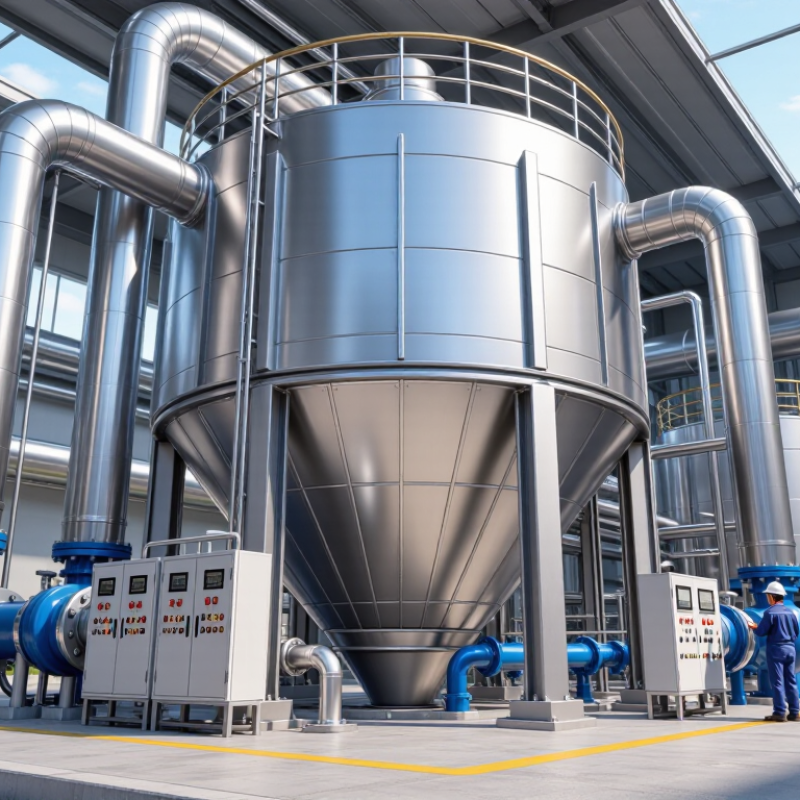
Spray towers are simple open vessels: liquid nozzles create droplets as gas flows through the chamber. Their open design can reduce clogging when dust loads vary. Packed towers provide more gas-liquid contact, but packing may foul when solids or sticky aerosols are present. Venturi scrubbers suit finer particles, though they generally require more energy. Choose by pollutant, flow rate, and maintenance access—not vessel size alone.
The US EPA’s Air Pollution Control Cost Manual gives a broad particulate-control efficiency range of roughly 50–99% for wet scrubbers, depending on design and operating conditions. This is not a spray-tower guarantee. Ask suppliers for performance data at your actual gas temperature, inlet loading, and liquid chemistry. A clean-water test can mislead; real process liquid may scale, corrode, or lose effectiveness. I would check nozzle coverage and mist-eliminator access before comparing price.
Tip: Compare open spray, packed-bed, and venturi configurations against your dust size and gas-absorption needs. Confirm pressure drop, recirculation rate, nozzle material, and drain access. Request expected efficiency at your operating range, not a single headline figure. Small details matter. A maintenance door placed behind a pipe rack is still a poor configuration.
Assess Materials, Components, and Maintenance Needs
When comparing spray towers, start with the liquid, gas, and operating temperature—not just the material list. Corrosion depends on chemistry, concentration, temperature, and cleaning cycles. Ask for documented material compatibility under your actual conditions. A resin or alloy that performs well in one plant may fail elsewhere. Small details matter.
Inspect the shell, spray headers, nozzles, demisters, access doors, and drains as a connected system. Request nozzle flow data and pressure-drop estimates for expected operating rates. Check whether demister elements can be removed without dismantling nearby pipework. Look inside. Poor access can turn a routine inspection into a long shutdown. Ask how the design handles solids, scaling, and uneven liquid distribution. A clean-water test may not represent your process, but it can reveal leaks or blocked sprays.
Make maintenance planning specific: request a parts list, inspection intervals, cleaning methods, and replacement lead times. Confirm which components use standard sizes and which are made to order. Ask for service-life estimates with their assumptions stated, not just a number. A common blind spot is labor: lifting points, safe access, and washdown space affect upkeep. Leave room for uncertainty. Ask suppliers to identify likely wear points and explain what evidence supports their estimates.
7 Spray Tower Buying Tips for Global Buyers
Compare material density as one practical procurement check. Lower density can reduce component weight, but chemical compatibility, temperature limits, structural design, and maintenance requirements should guide final material selection.
Approximate typical densities: polypropylene 900, PVDF 1,780, carbon steel 7,850, and stainless steels 304 and 316L about 8,000 kg/m³. Values vary by grade, formulation, and product form; density alone does not determine suitability.
Verify Performance Data, Safety, and Compliance
7 Spray Tower Buying Tips for Global Buyers
Verify Performance Data, Safety, and Compliance
EPA’s Wet Scrubbers for Particulate Matter fact sheet reports collection efficiencies of 70–99% across wet-scrubber applications, depending on design and operating conditions. This is not a guaranteed spray-tower result. Ask suppliers for test reports showing inlet and outlet concentrations, liquid flow, pressure drop, and gas temperature. A brochure is not proof. Compare data from similar operating conditions, not ideal laboratory settings.
Safety and compliance need equal attention. Check that wetted materials suit the process chemistry; corrosion can quietly weaken a tower. Review access platforms, drain arrangements, mist eliminators, and fan interlocks with the site team. Request emissions test records and documentation for wastewater management. Requirements vary by location, so confirm applicable limits and permits with qualified local professionals. Some buyers overlook maintenance access. That is easy to regret.
Tips: Ask for independent performance data, not just a sales estimate. Check the test method and operating conditions. Inspect the tower’s materials against your process fluids. Confirm local emissions and wastewater requirements before purchase. Measure it yourself where practical. EPA’s reported range is useful context, not a substitute for project-specific verification.
Evaluate Suppliers, Total Costs, and Global Logistics
Compare suppliers using the same duty conditions: gas flow, inlet temperature, pressure drop, liquid circulation, and target removal efficiency. Ask for drawings, material specifications, inspection records, and references for similar operating environments. Check whether nozzles, pumps, and packing can be replaced locally. A polished quotation is not proof of reliable service.
Build total cost beyond the purchase price. Include installation, foundations, controls, commissioning, water treatment, energy, spare parts, and planned downtime. UNCTAD’s Review of Maritime Transport 2024 reports that over 80% of world trade by volume moves by sea. The World Bank’s 2023 Logistics Performance Index analysis found a typical shipment took 44 days from an exporter’s warehouse to its destination, with a 10.5-day standard deviation. Transit estimates need a buffer. Still, surprises happen.
Tip: Request a landed-cost quote showing packing, freight, insurance, port handling, and delivery to site. Confirm tower dimensions, lifting points, and crate weights before booking transport. Ask who handles damaged cargo and delayed parts. Compare at least two shipping routes, but do not choose only by the lowest freight charge. A cheaper route may create costly installation delays. Check assumptions with your engineering and logistics teams; estimates can miss real site constraints.