What Is a Three Mouth Faucet and How Does It Work?
A Three-Mouth Faucet is designed to bring several water functions to one sink, but the term does not describe a single universal layout. In many models, separate passages serve hot water, cold water, and filtered drinking water. The exact controls and connections vary, so the product diagram matters. Small details count.
The design responds to everyday routines: rinsing vegetables, filling a kettle, and washing dishes may happen within minutes of each other. The U.S. Geological Survey estimated domestic water use at about 82 gallons per person per day in its 2015 national assessment. That figure includes many household uses, not just water from kitchen faucets. Still, it shows why a reliable, convenient fixture can matter at the point of use.
This guide explains how the three water paths work, how the handles direct flow, and what to check before installation. Filtered-water outlets may connect to a separate treatment system, but a faucet alone does not make water safer. For filtration claims, look for certification to relevant NSF/ANSI standards and confirm that the certified system addresses the specific contaminant of concern. Check the manufacturer’s specifications, too. A three-outlet design can simplify the counter; it can also add plumbing connections that need careful setup.
What Defines a Three-Way Faucet: Separate Paths for Hot, Cold, and Filtered Water
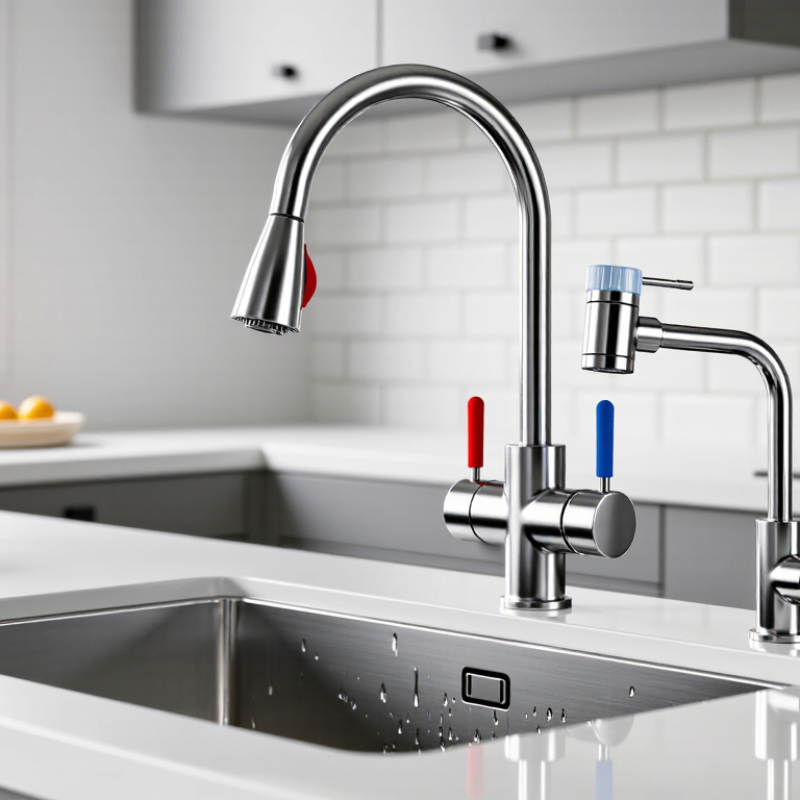
A three-way faucet carries hot, cold, and filtered water through separate internal paths. The spout may look like an ordinary kitchen faucet, but its waterways are designed to keep filtered water apart from the unfiltered supply. That separation helps prevent the two streams from mixing inside the faucet.
Three paths. One fixture. Hot and cold water are usually blended through a conventional control, while filtered water is activated by a separate lever or button. Depending on the design, filtered water may flow from the same spout through its own passage, or from a distinct outlet beside it. Watch the stream: filtered water should start only when its control is engaged. The filter itself is typically installed under the sink and connected to the faucet with dedicated tubing.
Correct installation matters. The filtered line must connect to the designated inlet, not to a hot or cold supply. Connections and filter requirements vary, so check the faucet instructions and the filter’s specifications before fitting anything. A small mix-up can make the controls confusing, even if the faucet still appears to work. Over time, replace the filter as directed and inspect the tubing for leaks. The arrangement is convenient, but it does not make water quality automatic; the filter must suit the incoming water and be maintained properly.
How Its Internal Channels and Mixing Valve Route Water to the Spout
A three-mouth faucet uses separate internal passages to carry water toward one spout. The exact layout depends on the faucet’s design. In many models, hot and cold water enter through different inlets, while a third passage carries filtered water or serves another dedicated supply. The openings may sit close together, but the channels remain separate inside the body.
A mixing valve controls the hot and cold streams. Turn the handle, and the valve changes how much of each stream enters the shared outlet passage. More hot water raises the temperature; more cold water lowers it. The mixed water then travels up the spout. A separate channel may bypass the mixing valve, so its water does not blend with the tap supply. That distinction matters when connecting the faucet to compatible plumbing.
Inside the faucet, narrow passages and seals keep the routes apart. A worn seal can cause leaking or unwanted mixing, though symptoms vary by model. The mechanism is compact, not magical. Installation diagrams are useful because similar-looking connections can serve different purposes. Check the water paths before fitting or troubleshooting; guessing can send water through the wrong channel.
What Is a Three Mouth Faucet and How Does It Work? - How Its Internal Channels and Mixing Valve Route Water to the Spout
| Topic |
How It Works |
Practical Detail |
| Meaning of the term |
“Three mouth faucet” is often used to describe a three-hole faucet arrangement: a spout and two separate handles mounted through three openings. |
The exact meaning can vary by region or product description. It usually refers to the mounting layout, not three water outlets. |
| Hot-water supply |
A supply line carries hot water from the plumbing system to the faucet’s hot-water inlet. |
The hot handle, where fitted, controls the hot-water side. |
| Cold-water supply |
A separate supply line carries cold water to the faucet’s cold-water inlet. |
The cold handle controls the cold-water side. |
| Internal channels |
Passages inside the faucet body guide water from the inlets toward the control valves and then to the spout. |
The precise channel layout depends on the faucet design. |
| Mixing and flow control |
In a common two-handle design, each handle operates a valve that regulates its water supply. The hot and cold streams combine in the faucet body or near the spout. |
Adjusting both handles changes the delivered temperature; opening them further generally increases flow. |
| Valve types |
Depending on the model, the controls may use compression valves, ceramic-disc cartridges, or other valve assemblies. |
The valve type affects operation and maintenance; consult the faucet’s installation or service information before replacing parts. |
| Spout and aerator |
After mixing, water travels through the spout and exits at its outlet. Many faucets have an aerator that adds air to the stream. |
An aerator can create a more even-feeling stream and may help reduce splashing. |
| Installation check |
The sink or countertop must have openings positioned and sized for the faucet components, and the supply connections must match the installation requirements. |
Check the faucet’s stated hole spacing, mounting requirements, and connection details before installation. |
How the Handle Selects Water and Controls Flow and Temperature
What Is a Three Mouth Faucet and How Does It Work?
A three-mouth faucet usually contains three water passages inside its valve body. These passages may carry hot water, cold water, and mixed water, depending on the design. The handle controls how these passages connect. It does not simply open one pipe. Instead, it moves a cartridge or diverter that balances water entering the spout.
Move the handle left, and the hot-water opening becomes larger. Move it right, and the cold-water opening increases. In the middle position, both streams combine inside the cartridge. The farther you lift the handle, the greater the flow rate becomes. A slight movement can noticeably change the temperature.
This needs careful adjustment. Very small handles may feel overly sensitive. Turn slowly. The internal ceramic discs or seals must align smoothly, or the faucet may drip or feel stiff. Some three-mouth models use a separate selector position for a filtered, hand-spray, or secondary outlet. In that case, rotating or pressing the handle changes the water route before it controls volume.
The exact motion varies.
Installation experience shows one common mistake: users often assume the center position always means warm water. Pipe connections, pressure differences, and cartridge design can change that result. If hot water pressure is weak, the handle may still move normally but produce mostly cold water. Checking the inlet markings and observing the first few seconds of flow can prevent confusion.
How It Connects to Plumbing and a Filter Without Mixing Water Lines
What Is a Three Mouth Faucet and How Does It Work?
A three-mouth faucet uses separate passages for hot, cold, and filtered water. The hot and cold lines connect to the main supply valves beneath the sink. A third tube connects directly to the filter outlet. Inside the faucet, these channels remain physically separated. Filtered water leaves through a dedicated inner spout, while unfiltered water uses the standard outlets.
This design prevents ordinary tap water from entering the filtered line during normal operation. A correct installation needs independent hoses, properly tightened fittings, and suitable backflow protection. Local plumbing rules may also require an air gap or check valve. The U.S. Environmental Protection Agency’s WaterSense program reports that household leaks can waste nearly 10,000 gallons of water yearly. A small loose connection deserves attention. It may waste water and reduce filter performance.
The filter itself should match the contaminant concern. NSF/ANSI 42 covers aesthetic issues, such as chlorine and taste. NSF/ANSI 53 addresses specific health-related contaminants. NSF/ANSI 58 applies to reverse-osmosis systems. The CDC recommends following the filter maker’s replacement schedule and using certified products. Still, certification does not make every filter suitable for every water problem. That part is easy to overlook.
Tips: Label each tube before installation. Keep filtered tubing away from drain hoses. Flush the filter before drinking. Check every joint with a dry paper towel. If the paper becomes damp, stop and inspect the connection.
How NSF/ANSI 372 Limits Lead in Wetted Components to a 0.25% Weighted Average
What Is a Three Mouth Faucet and How Does It Work?
A three mouth faucet usually serves hot, cold, and filtered drinking water through separate internal paths. The design may use one body with three controls, or one handle with a dedicated drinking-water lever. Inside, valves guide each supply without mixing them unnecessarily. When you turn the filtered-water handle, water travels through the treatment system before reaching the smaller outlet. That separate route helps protect taste and reduces cross-flow risks during normal use.
Material safety deserves closer attention. NSF/ANSI/CAN 372 limits lead in wetted components to a 0.25% weighted average. Wetted components include parts that contact drinking water, such as valves, tubes, connectors, and outlet passages. The limit applies to the combined material calculation, not simply one visible part. This distinction matters.
It is not zero lead.
The standard controls lead content in plumbing materials, but it does not replace proper testing, installation, or maintenance. A qualified conformity assessment process should review representative components and supporting production records. Installers should also flush new lines, check connections, and replace filters according to their service conditions. A faucet can meet the material requirement yet perform poorly if tubing is damaged or fittings are contaminated. The wording is technical, and easy to oversimplify. Reviewing the certification scope and the exact wetted parts remains a sensible step before purchase.