Top 5 Tips for Choosing the Right Centrifugal Fan?
Choosing the right centrifugal fan can significantly impact operational efficiency and airflow management. In the HVAC industry, centrifugal fans account for approximately 10% of energy consumption in commercial buildings. This emphasizes the importance of selecting a fan that meets specific application requirements.
According to industry expert Dr. Emily Carter, a leading engineer in aerodynamics, "The effectiveness of a centrifugal fan lies in its design efficiency and application compatibility." Her insights highlight the need for thorough research and careful consideration when choosing a fan.
Selecting a centrifugal fan requires understanding system requirements, airflow needs, and energy efficiency. Mistakes in this process can lead to wasted resources and inadequate performance. Therefore, it’s critical to evaluate various models and their specifications before making a decision. Balancing cost with quality is essential to ensure long-term reliability and performance.

Understanding the Purpose and Application of Centrifugal Fans
Centrifugal fans play a crucial role in various applications, from ventilation systems to manufacturing processes. Understanding their purpose can help in making the right choice. They enhance airflow by converting rotational energy into a pressure difference, which allows them to move air efficiently. This efficiency is vital in industries like HVAC, agriculture, and dust extraction.
When selecting a centrifugal fan, consider its specific application. Different tasks require different fan designs. For instance, high-pressure environments might need a robust fan. Tip: Assess the airflow requirements and pressure needs of your project. This clarity provides a foundation for choosing the right fan.
Another key factor is the fan's operating environment. Dusty or corrosive environments may necessitate a fan with protective features. Tip: Look for materials that resist wear and tear. Regular maintenance also matters. A quality fan may falter without proper care, revealing the need for diligent oversight. Ensuring that your fan meets operational demands is essential for optimal performance.
Top 5 Tips for Choosing the Right Centrifugal Fan
This chart represents the key factors to consider when choosing a centrifugal fan, based on their importance rating.
Key Technical Specifications to Consider When Selecting a Fan
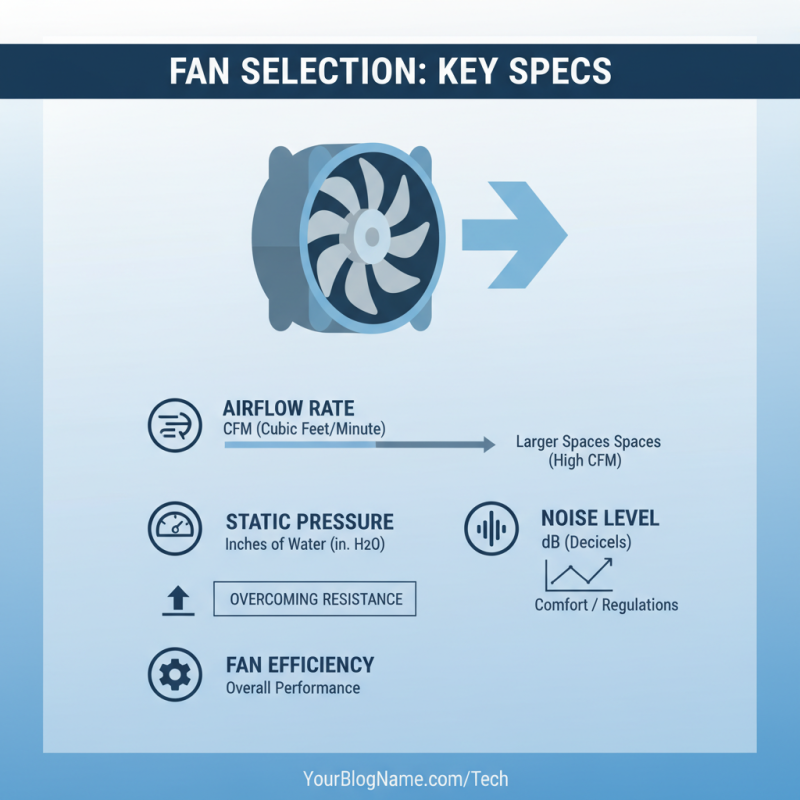
When selecting a centrifugal fan, understanding key technical specifications is crucial. One important specification is air flow rate, measured in cubic feet per minute (CFM). This determines how much air the fan can move. High flow rates are beneficial for larger spaces, while lower rates suit smaller areas. Ensure the chosen fan meets the specific air flow requirements of your application.
Another critical factor is static pressure. This refers to the resistance the fan will face when pushing air through ducts or filters. High static pressure fans are necessary for systems with complex airflow paths. This could lead to trial and error in fan selection. Consider consulting with experts to avoid mismatches. Additionally, noise levels are worth evaluating. Fans can vary greatly in how loud they operate. Understanding the acceptable noise level for your environment is important.
Energy efficiency is another technical aspect to review. Choose fans with higher efficiency ratings to minimize operational costs. This could be a reflection of market trends toward sustainability. Lastly, ensure compatibility with your existing system. The physical dimensions and mounting options should align with your needs. Ignoring these details may lead to installation challenges later on. Awareness of these parameters will enhance your selection process.
Evaluating Noise Levels and Energy Efficiency of Centrifugal Fans
Choosing the right centrifugal fan requires careful consideration of various factors. Evaluating noise levels and energy efficiency are critical components in this decision-making process. A study by the American Society of Heating, Refrigerating and Air-Conditioning Engineers (ASHRAE) indicates that noise levels can significantly impact workplace productivity. Fans operating above 70 dBA may cause discomfort, reducing focus among workers. Hence, seeking models designed for quieter operation, ideally below 60 dBA, can create a more conducive environment.
Energy efficiency in centrifugal fans is essential for reducing operational costs. According to the U.S. Department of Energy, fans can account for up to 15% of industrial energy use. Selecting fans with a high-efficiency motor can make a noticeable difference. Look for models that comply with standards like the Energy Star certification. Reducing energy consumption not only lowers costs but also minimizes environmental impact.
Consider the right fan size and design. Oversized fans can waste energy and create excessive noise. A well-sized fan ensures optimal performance while keeping energy costs in check. Balancing these elements might seem complex but is crucial. Regular maintenance can improve efficiency and longevity, so never overlook this aspect. Investing in quality pays dividends in the long run.
Top 5 Tips for Choosing the Right Centrifugal Fan
| Criteria |
Description |
Noise Level (dB) |
Energy Efficiency (%) |
| Fan Size |
Determining the appropriate size according to ductwork and airflow requirements. |
60 |
85 |
| Fan Type |
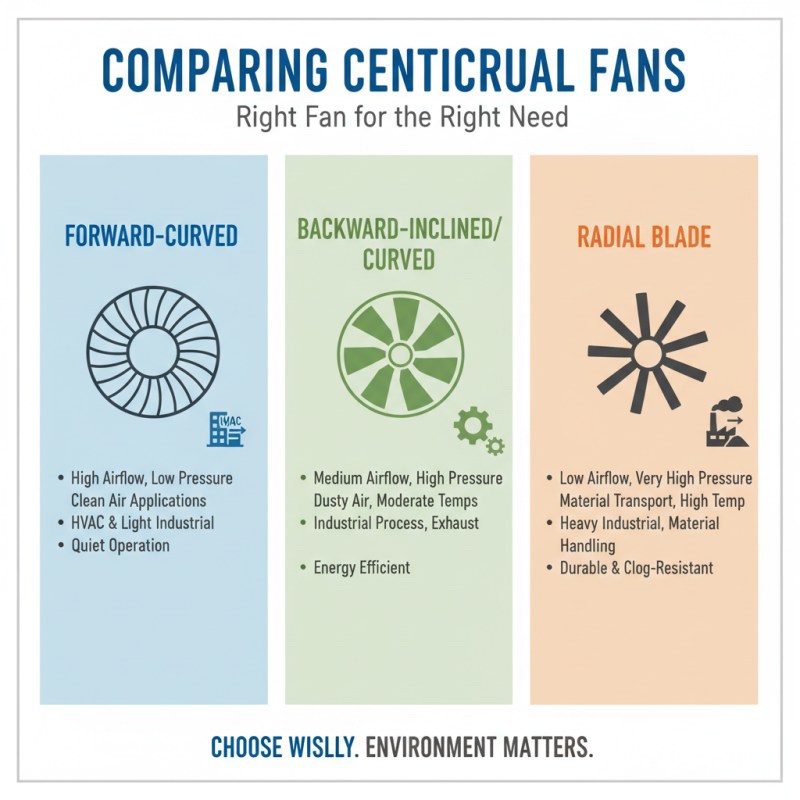
Choosing between various types such as forward-curved, backward-curved, and radial fans based on application. |
68 |
90 |
| Motor Type |
Selecting between AC and DC motors for optimal performance and cost efficiency. |
62 |
75 |
| Material |
Choosing materials that offer durability and low vibration for quieter operation. |
65 |
80 |
| Application Suitability |
Ensuring the fan meets the specific needs of industries like HVAC, manufacturing, or agriculture. |
70 |
88 |
Comparing Different Types of Centrifugal Fans for Specific Needs
Choosing the right centrifugal fan involves understanding specific needs. Not all fans serve the same purpose. Different environments require different fan designs.
For high-pressure applications, look for backward-curved impellers. They provide high efficiency and can handle dense airflows. If noise is a concern, select fans with forward-curved blades. They operate quieter but can struggle with airflow under pressure.
For dusty or abrasive environments, opt for heavy-duty fans. They need durable materials to withstand wear. Keep in mind, a less powerful fan might seem appealing, but it may not meet your airflow requirements. Evaluating airflow needs and pressure ratings can prevent costly mistakes. Choosing the right fan isn’t always straightforward. Reflecting on what you truly need can lead to better decisions.
Assessing Maintenance Requirements and Lifespan for Longevity
When selecting a centrifugal fan, assessing its maintenance requirements can significantly determine its lifespan. A fan that requires frequent upkeep may not be the best choice for long-term operation. Regular servicing could interrupt production and increase overall costs. Look for designs that allow easy access for repairs. Simple maintenance tasks can prevent larger issues down the line.
Consider the materials used in fan construction. High-quality materials often correlate with better durability. They withstand wear and tear effectively. If the fan is prone to rust or corrosion, it may shorten its lifespan. Checking warranty information can reveal valuable insights. Manufacturers that stand behind their products tend to offer more durable options.
Finally, think about the fan's operating environment. Dusty, humid, or extreme temperature settings can impact performance. A fan that fits well in its intended environment will likely require less maintenance and last longer. It’s essential to analyze all these factors to make an informed decision. Be open to reassessing your initial thoughts based on the fan's specifications.