Leave Your Message
An Anti-Static Workbench is a controlled workspace designed to protect sensitive electronic components from electrostatic discharge. It usually combines a grounded, dissipative work surface with suitable wrist straps, floor connections, and storage accessories. This setup matters because a tiny invisible spark can damage a circuit board without leaving an obvious mark. The component may pass inspection, then fail weeks later. That delayed failure is easy to miss.
In practical electronics work, the bench becomes part of the quality process. Technicians can place circuit boards on a conductive mat, connect their wrist strap, and verify grounding before handling delicate parts. Humidity, clothing, footwear, and nearby plastic materials can still affect performance. A grounded table is not a complete solution. It must support consistent procedures, regular testing, and staff training. Small details matter. Even a loose ground cable can weaken protection.
Choosing the right Anti-Static Workbench depends on the work involved. Repair stations may need adjustable lighting, drawers, shelving, and cleanable surfaces. Production areas may require stronger frames and documented grounding checks. Standards and recommendations from recognized electrostatic-control organizations can guide safer decisions. However, equipment alone cannot remove every risk. Work habits remain important. A rushed technician may touch a component before connecting their strap. That simple mistake deserves attention, not blame. With practical design and disciplined use, an anti-static bench can reduce preventable damage, improve handling consistency, and support more reliable electronic assembly and repair. The investment is modest compared with repeated component failures, though its value should be measured through real workplace results.
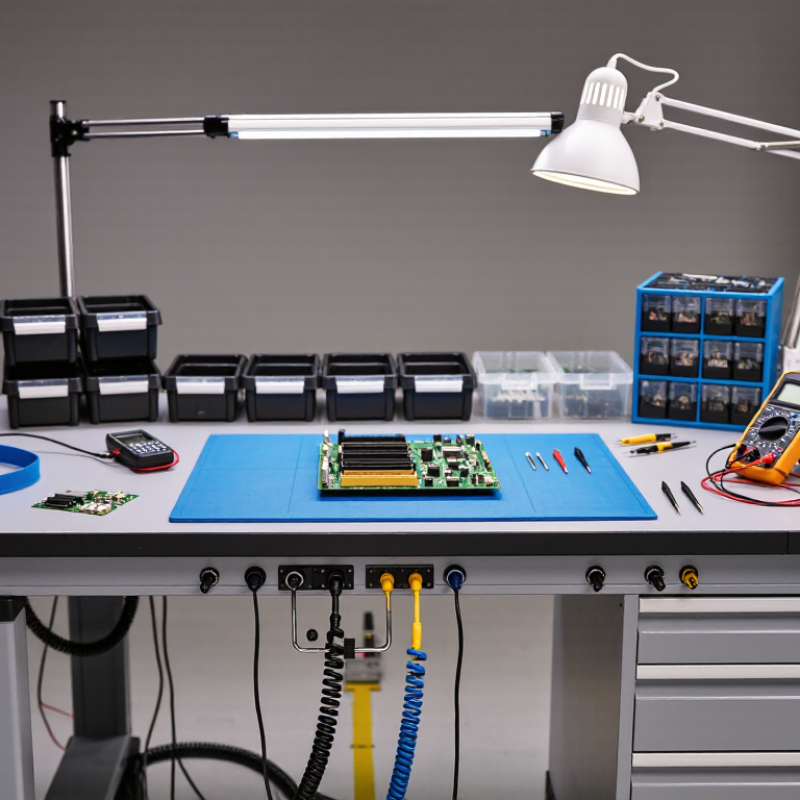
An anti-static workbench is a controlled workstation that limits electrostatic discharge, or ESD, around sensitive electronics. It usually combines a dissipative tabletop, a grounding point, an operator wrist-strap connection, and conductive flooring or seating. Instead of allowing charge to build and release suddenly, the bench drains it gradually.
The numbers matter. ANSI/ESD S4.1 guidance commonly places a dissipative worksurface between 1.0×10⁶ and 1.0×10⁹ ohms to ground. IEC 61340-5-1 also requires a verified grounding system, not a cable added for appearance. The ESD Association’s technology roadmaps continue to identify smaller components and higher circuit density as growing ESD-control challenges. A tiny spark may remain invisible. Its damage may appear weeks later as intermittent failure.
That sounds simple.
In real workshops, it is less tidy. A grounded bench can still fail when its mat is contaminated, its grounding cord is loose, or an operator touches an unprotected component. I have seen dust near the grounding point create false confidence during inspections. Regular resistance testing, documented checks, and disciplined handling are essential. A bench should also keep ordinary plastics, foam, and personal devices away from the work area. The ESD Association recommends verifying protective equipment through routine measurements, rather than trusting labels or appearance. That habit feels excessive until one expensive board fails without visible damage.
| Data Dimension | Typical Anti-Static Workbench Data | What It Means | Why It Matters |
|---|---|---|---|
| Primary purpose | Controlled dissipation of electrostatic charge | The workbench provides a defined path for static electricity to move safely to ground instead of accumulating on the work surface or operator. | Reduces the risk of electrostatic discharge damaging sensitive electronic components. |
| Work-surface material | Dissipative laminate, rubber, or other static-control material | The surface is designed to conduct charge gradually rather than release it suddenly. | Helps protect circuit boards, sensors, memory devices, and other electrostatic-sensitive items during handling. |
| Surface resistance range | Commonly between 1 × 10⁶ and less than 1 × 10⁹ ohms for a dissipative work surface | A dissipative surface allows charge to flow slowly and in a controlled manner. | Balances charge removal with protection against a rapid electrical discharge. |
| Grounding method | Dedicated grounding point connected to a verified earth ground | The work surface, accessories, and sometimes the operator are connected to a common grounding system. | Without a reliable ground, a static-control surface cannot consistently remove accumulated charge. |
| Operator grounding | Wrist strap or conductive footwear used with a suitable grounding system | Human bodies can accumulate thousands of volts through ordinary movement, especially in dry environments. | Grounding the operator reduces the chance of transferring a damaging discharge to a component. |
| Common workbench accessories | Grounding cords, wrist-strap connection points, shelving, lighting, tool storage, and component bins | Accessories can be integrated into the same controlled static-protection area. | Creates a more consistent workstation and reduces accidental contact with unprotected surfaces. |
| Typical applications | Electronics assembly, inspection, repair, testing, rework, and laboratory handling | These activities involve direct contact with exposed electronic parts or circuit assemblies. | Provides protection during the stages when components are most vulnerable to electrostatic damage. |
| Sensitive items protected | Integrated circuits, printed circuit boards, sensors, processors, memory devices, and electronic modules | Many modern components can be damaged by discharges that are not visible or felt by people. | Prevents immediate failure and latent defects that may appear later in the product’s service life. |
| Environmental consideration | Lower relative humidity generally increases static-charge risk | Dry air allows charge to remain on people, clothing, packaging, and surfaces for longer periods. | A static-control workbench is especially important in dry rooms or air-conditioned production areas. |
| Required maintenance | Regular inspection of surface condition, grounding connections, cords, and resistance | Wear, dirt, coatings, loose connections, and damaged cables can reduce performance. | Routine verification helps ensure that the workstation continues to provide a controlled discharge path. |
| Difference from a conventional workbench | Includes static-dissipative materials and a grounding system | A conventional wooden, plastic, painted, or laminated bench may insulate charge or allow uncontrolled discharge. | A dedicated anti-static workbench provides more predictable protection for electrostatic-sensitive devices. |
| Best-practice requirement | Use as part of an electrostatic protected area | The bench should be combined with suitable handling procedures, packaging, grounding, and regular verification. | Static protection is most effective when the entire work area—not only the tabletop—is controlled. |