Leave Your Message
Choosing the right Activated Carbon Adsorption Box is a practical engineering decision, not a simple product comparison. The box must match the contaminant, airflow, temperature, humidity, and required removal efficiency. A unit that performs well in a dry workshop may struggle in a humid coating room. Details matter.
Professor Ralph T. Yang, a recognized adsorption researcher and author, stated, “Adsorption is a surface phenomenon, not merely a matter of filling empty space.” This principle helps explain why carbon type, pore structure, and surface chemistry deserve careful attention. Coconut-shell carbon often provides strong microporosity for smaller molecules, while coal-based carbon may offer broader pore distribution. Neither option is automatically better.
Measure the airflow first.
Then identify the pollutant.
A reliable selection process should review the contaminant’s concentration, molecular size, boiling point, and expected loading. It should also examine pressure drop, carbon bed depth, access for replacement, and the manufacturer’s test data. A box with an attractive capacity rating may still become ineffective if the air moves too quickly through the bed.
Real experience also exposes an uncomfortable limitation: laboratory performance does not always predict field performance. Dust, moisture, mixed vapors, and irregular maintenance can reduce service life. I have seen specifications look convincing until operating conditions changed. That is why pilot testing, breakthrough monitoring, and a replacement plan remain essential.
The best Activated Carbon Adsorption Box balances verified adsorption performance, safe construction, manageable maintenance, and total operating cost. Selection should be evidence-based, but never blindly confident.
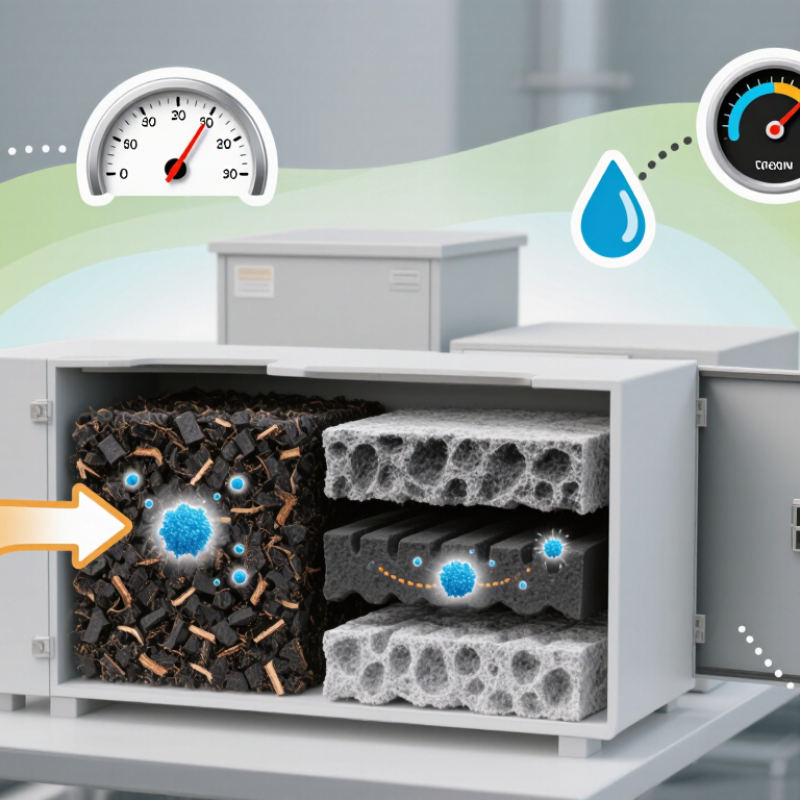
How to Choose the Best Activated Carbon Adsorption Box
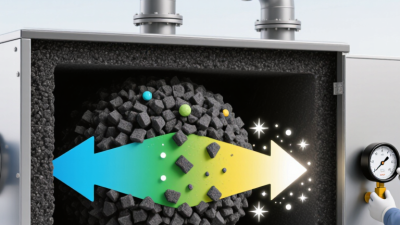
An activated carbon adsorption box cleans air through a surface process, not a chemical reaction. A fan pushes contaminated air through porous carbon. Pollutant molecules attach inside tiny pores. Volatile organic compounds, odors, and some solvent vapors may be captured this way.
The 2023 ASHRAE Handbook explains that adsorption performance depends on carbon mass, bed depth, airflow, temperature, and humidity. The U.S. EPA also notes that gas-phase filters need enough carbon and contact time to work effectively. A thin carbon sheet may reduce odors briefly, but it can reach breakthrough quickly. This is often overlooked. High humidity can compete for adsorption sites. Pressure drop can also rise as dust blocks the pre-filter. In practice, replacement timing should follow measured odor return, contaminant loading, and operating hours, not a calendar alone.
Tips: Check the carbon weight, bed thickness, airflow rating, and target pollutant. Use a pre-filter for dust. Keep the box sealed around the filter. Ask for test conditions, because laboratory results may not match a humid workshop. A 2024 industrial filtration review reported that carbon bed life can vary widely with concentration and humidity. That finding matters more than a simple efficiency percentage. Some selection decisions remain uncertain without site measurements.
| Selection Dimension | How the Adsorption Box Works | Typical Data or Range | What to Look For | Practical Selection Guidance |
|---|---|---|---|---|
| Adsorption Principle | Activated carbon removes many gaseous pollutants mainly through physical adsorption. Contaminant molecules are retained on the carbon's internal pore surfaces. | Surface area commonly ranges from approximately 500 to 1,500 m²/g, depending on the carbon grade and activation process. | A suitable carbon grade with adequate micropore and mesopore structure. | Match the pore structure and carbon chemistry to the target contaminant instead of selecting only by total surface area. |
| Target Contaminant | Different compounds have different adsorption affinities. Non-polar organic vapors are generally well suited to standard activated carbon. | Common targets include VOCs, solvent vapors, odors, chlorine, and some sulfur-containing compounds. | Carbon specifically treated or impregnated for acidic gases, alkaline gases, mercury, or other difficult contaminants. | Obtain the contaminant name, concentration, temperature, humidity, and airflow before sizing the box. |
| Carbon Type | Granular activated carbon provides a packed adsorption bed. Pelletized carbon often offers lower pressure drop than fine granules at comparable airflow. | Typical media forms include granular, pelletized, and powdered carbon; adsorption boxes generally use granular or pelletized media. | Uniform particle size, low dust generation, adequate mechanical strength, and documented contaminant compatibility. | Use impregnated carbon when the target gas requires chemical reaction or enhanced selectivity rather than physical adsorption alone. |
| Iodine Number | The iodine number is a broad indicator of micropore development and is often used to compare carbons intended for smaller molecules. | Many commercial activated carbons have iodine numbers of approximately 800 to 1,200 mg/g. | A test value relevant to the intended application, not simply the highest available number. | Do not use iodine number alone to predict VOC capacity; vapor-specific breakthrough testing is more meaningful. |
| Airflow and Contact Time | Air passes through the carbon bed, and contaminants require sufficient contact with the media to diffuse into the pores. | Empty bed contact time is commonly designed in the range of approximately 0.1 to 1.0 seconds, depending on the contaminant and system design. | Stable airflow, adequate bed depth, and a face velocity that does not cause excessive pressure drop. | Higher airflow usually reduces contact time and can shorten the service life of the carbon bed. |
| Relative Humidity | Water vapor can occupy adsorption sites and compete with some contaminants, reducing the effective capacity of the carbon. | Performance may decline as humidity rises, particularly for water-soluble compounds and untreated carbon. | Moisture-resistant housing, upstream dehumidification, or a carbon grade selected for humid service. | Keep liquid water and condensation out of the bed; verify performance under the actual operating humidity. |
| Temperature | Adsorption is generally favored at lower temperatures. Increasing temperature can promote desorption and reduce capacity. | Many systems operate near ambient temperature, commonly about 15–35°C, subject to the carbon specification. | Carbon and gasket materials rated for the actual minimum and maximum temperatures. | Avoid locating the box near hot exhaust unless the selected media has been evaluated for that temperature. |
| Pressure Drop | Air resistance is created by the carbon bed, support screens, prefilters, and housing geometry. | Actual pressure drop depends on bed depth, particle size, airflow, dust loading, and moisture; it must be measured or calculated for the design. | A rigid bed-retention system, uniform media distribution, and an accessible pressure-drop monitoring point. | Install a prefilter when dust or aerosols are present, because particulate loading can rapidly increase resistance. |
| Prefiltration | A particulate filter protects the carbon bed from dust, oil mist, and other aerosols that can block pores and increase pressure drop. | Common HVAC prefilter efficiencies include approximately MERV 8–13, selected according to the particulate load and airflow system. | Filter access, replacement availability, and compatibility with the required airflow. | Use the highest practical prefilter efficiency that the fan and system pressure budget can support. |
| Service Life | The carbon gradually approaches saturation. Once the mass-transfer zone reaches the outlet, contaminant breakthrough can occur. | Service life varies widely with contaminant concentration, airflow, humidity, temperature, bed depth, and carbon capacity. | Sampling ports, outlet monitoring, differential-pressure gauges, or a scheduled replacement plan. | Set replacement intervals using outlet measurements or validated calculations rather than calendar time alone. |
| Breakthrough Monitoring | Breakthrough occurs when the outlet concentration rises above the acceptable limit. | Monitoring may use direct-reading instruments, laboratory sampling, or contaminant-specific detectors. | Sampling access before and after the adsorption bed, with a defined acceptable outlet concentration. | For hazardous or regulated contaminants, establish an alarm and replacement procedure before commissioning. |
| Box Construction | The housing directs air evenly through the media and prevents bypass around the carbon bed. | Important features include sealed access panels, corrosion-resistant surfaces, secure media retainers, and uniform airflow distribution. | Leak-resistant joints, replaceable cartridges or trays, safe lifting points, and inspection access. | Choose a design that allows media replacement without disturbing adjacent equipment or exposing workers unnecessarily. |
| Safety and Disposal | Spent carbon may contain concentrated contaminants and can require controlled handling. | Disposal requirements depend on the adsorbed substances and applicable local regulations. | Written handling instructions, sealed transport containers, and a documented waste classification process. | Review compatibility, fire risk, and disposal requirements before selecting the carbon and housing arrangement. |
| Best Overall Choice | The most effective adsorption box combines suitable carbon chemistry, adequate bed capacity, uniform airflow, and reliable monitoring. | There is no universal carbon box that performs equally well for every contaminant or operating condition. | Application-specific design data and performance verification. | Select the box only after confirming contaminant type, concentration, airflow, humidity, temperature, allowable pressure drop, and maintenance access. |