Leave Your Message
Choosing the best Acid-Base Cabinet in 2026 requires more than comparing price, color, or storage capacity. Chemical compatibility comes first. A cabinet beside a sink may face splashes, humidity, and daily handling damage. Door seals, shelf loading, ventilation needs, and spill containment deserve equal attention.
OSHA’s Laboratory Standard, 29 CFR 1910.1450, requires laboratories to control chemical hazards through written procedures, training, and exposure prevention. It does not approve one universal cabinet design. That gap matters. NFPA 45:2023, Fire Protection for Laboratories Using Chemicals, also emphasizes separation, fire protection, and safe chemical storage practices. These standards provide a framework, not a shortcut.
NFPA’s Fire Loss in the United States During 2023 report recorded approximately 1.39 million fires across the country. This is not a laboratory-only figure. Still, it shows why fire-resistant construction and careful placement deserve serious review. In practice, an Acid-Base Cabinet should match the chemicals, container sizes, room layout, and emergency plan. A cabinet can still be wrong.
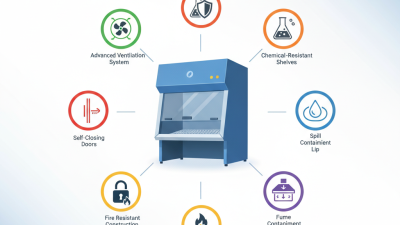
Look for corrosion-resistant interiors, adjustable shelves, leak-retaining bases, clear labeling, and secure doors. Acids and bases usually need separate storage, even when both cabinets appear identical. Check manufacturer test data, certification details, warranty terms, and maintenance instructions. Do not trust vague claims such as “chemical proof.”
The best choice depends on evidence. It also depends on local risk assessment. Reconsider the design before purchase, especially when space is limited or staff frequently move heavy containers. A polished cabinet is useful only when it supports safer daily behavior.
How to Choose the Best Acid Base Cabinet in 2026?
Understanding Acid Base Cabinet Types and Storage Requirements
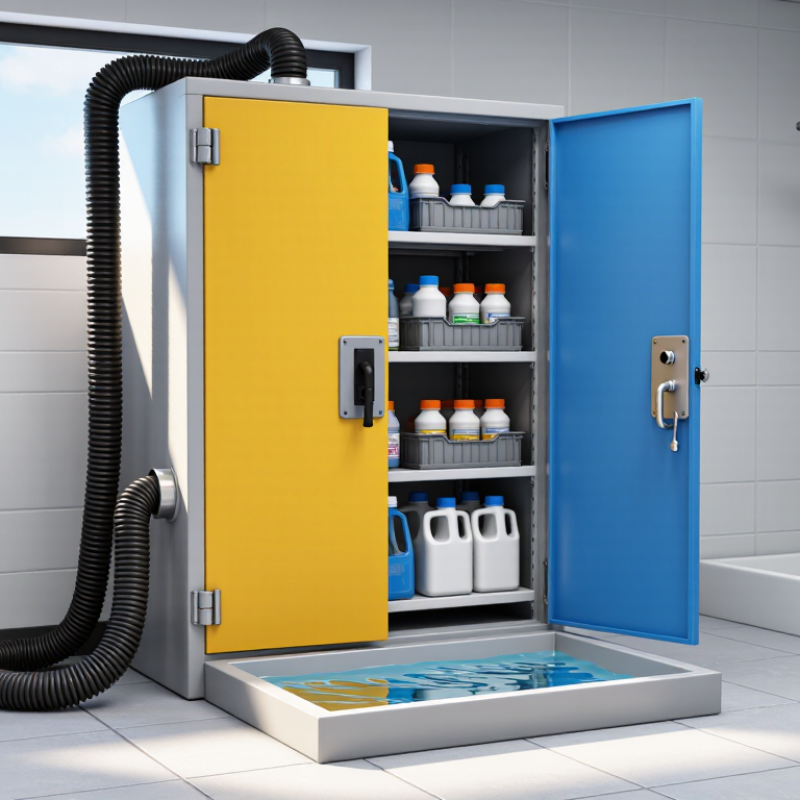
Choosing an acid base cabinet starts with chemical compatibility, not appearance. Acids and bases require separate storage because leaks can react violently. A corrosion-resistant cabinet should include sealed, removable trays. Polypropylene trays are useful for catching drips and simplifying cleanup. Strong oxidizing acids need extra separation from organic acids and solvents. Perchloric acid requires dedicated controls and should never share general acid storage.
OSHA’s Laboratory Standard, 29 CFR 1910.1450, requires hazard assessment, labeling, safety training, and accessible safety information. NFPA 30, 2024 edition, also distinguishes flammable-liquid storage from corrosive storage. These rules matter in daily work. The BLS reported about 2.6 million nonfatal private-industry injuries in 2023. Not every incident involves chemicals, but poor storage can increase preventable exposure risks. A cabinet may look compliant and still fail during a spill. That is an uncomfortable detail worth checking.
Tips: Keep containers below eye level. Use compatible secondary containment. Leave space around bottles. Inspect hinges, shelves, labels, and tray damage monthly. Never store chemicals by alphabet alone. Compatibility comes first. In practice, a simple inventory review often reveals expired reagents, missing labels, or overcrowded shelves. Those findings should change the cabinet design, not merely the storage list.
| Cabinet Type | Recommended Use | Typical Construction | Typical Capacity | Ventilation Guidance | Key Storage Requirement |
|---|---|---|---|---|---|
| Acid Corrosive Cabinet | Mineral acids and other non-flammable corrosive acids | Corrosion-resistant polymer construction or chemically resistant coated steel with compatible liners | Commonly 30–120 gal (114–454 L) | Do not connect to a mechanical exhaust system unless required by a risk assessment and approved by safety personnel | Use corrosion-resistant shelves and leak-containment trays; keep acids away from bases, cyanides, sulfides, and reactive metals |
| Base Corrosive Cabinet | Hydroxides, alkaline cleaners, ammonia solutions, and other non-flammable bases | Polyethylene, polypropylene, or resistant coated steel; shelf material must match the chemicals stored | Commonly 30–120 gal (114–454 L) | Passive ventilation is generally preferred; follow the safety data sheet and local requirements | Store bases separately from acids and protect metal components from alkaline corrosion |
| Dual-Compartment Acid/Base Cabinet | Facilities needing separate acid and base storage in one cabinet footprint | Physically separated compartments with independent spill containment | Often 30–90 gal total (114–341 L) | Each compartment should follow the ventilation and compatibility instructions for its contents | Compartments must not share trays or allow liquid transfer between acid and base sections |
| Under-Counter Corrosive Cabinet | Small laboratories with limited quantities and short access distances | Compact corrosion-resistant cabinet with adjustable shelves and a raised spill lip | Typically 15–30 gal (57–114 L) | Avoid placing the cabinet where fumes can accumulate around occupants; follow site ventilation controls | Keep containers below eye level and avoid storage beneath sinks or areas vulnerable to water leaks |
| High-Capacity Corrosive Cabinet | Bulk bottles, process chemicals, and higher-volume laboratory inventories | Reinforced frame, adjustable heavy-duty shelves, corrosion-resistant finish, and integral sump | Commonly 90–120 gal (341–454 L) or more | Evaluate room ventilation, container off-gassing, and emergency access before installation | Confirm floor loading, shelf capacity, anchoring, and secondary containment for the largest containers |
| Acid Cabinet with Secondary Containment | Higher-risk acids or containers requiring additional spill control | Built-in sump, removable trays, sealed shelf edges, and chemically compatible liners | Varies by cabinet; select by container volume and sump capacity | Use the least-emission storage arrangement consistent with the chemical risk assessment | The containment system should be able to retain a credible spill and remain compatible with the stored chemical |
| Flammable Acid or Base Cabinet | Flammable corrosive chemicals, only when the cabinet is specifically rated for flammable storage | Fire-rated flammable-liquid cabinet with corrosion-compatible interior components | Often 12–120 gal (45–454 L), subject to local code limits | Do not assume ordinary corrosive cabinets provide fire protection; follow the applicable fire code | Separate from oxidizers and ignition sources; verify both flammability and corrosivity requirements |
| Selection Dimension | What to Check | Practical Recommendation |
|---|---|---|
| Chemical Class | Acid, base, oxidizer, flammable, toxic, water-reactive, or mixed hazard | Select storage by the primary hazard and never combine incompatible hazard groups in one undivided compartment |
| Material Compatibility | Cabinet body, shelves, hinges, fasteners, liners, and spill trays | Check the safety data sheet and chemical-resistance data for every material exposed to the chemical |
| Container Size | Bottle dimensions, weight, closure type, and frequency of handling | Choose adjustable shelves with sufficient clearance and keep heavy containers on lower shelves |
| Spill Containment | Sump volume, tray depth, removable liners, and ease of cleanup | Use secondary containment for leak-prone, highly corrosive, or high-consequence chemicals |
| Ventilation | Chemical volatility, odor, corrosive vapor, room air changes, and local rules | Do not automatically duct a cabinet; obtain an industrial hygiene or safety review before modifying ventilation |
| Location | Emergency egress, heat sources, sinks, floor drains, traffic, and seismic exposure | Place the cabinet in a cool, dry, accessible location away from incompatible chemicals and potential impact |
| Identification | Hazard labels, inventory records, container labels, and access control | Keep original labels legible, maintain an up-to-date inventory, and label cabinet contents clearly |
| Standards and Local Rules | Applicable occupational, fire, building, environmental, and institutional requirements | Verify requirements with the responsible safety officer, authority having jurisdiction, and current safety data sheets before purchase |
Note: Capacities and construction details are typical selection ranges, not universal specifications. Always confirm chemical compatibility, load ratings, ventilation requirements, and local regulations for the exact chemicals and quantities being stored.