Leave Your Message

Top 10 Acid Base Cabinets for Global Buyers

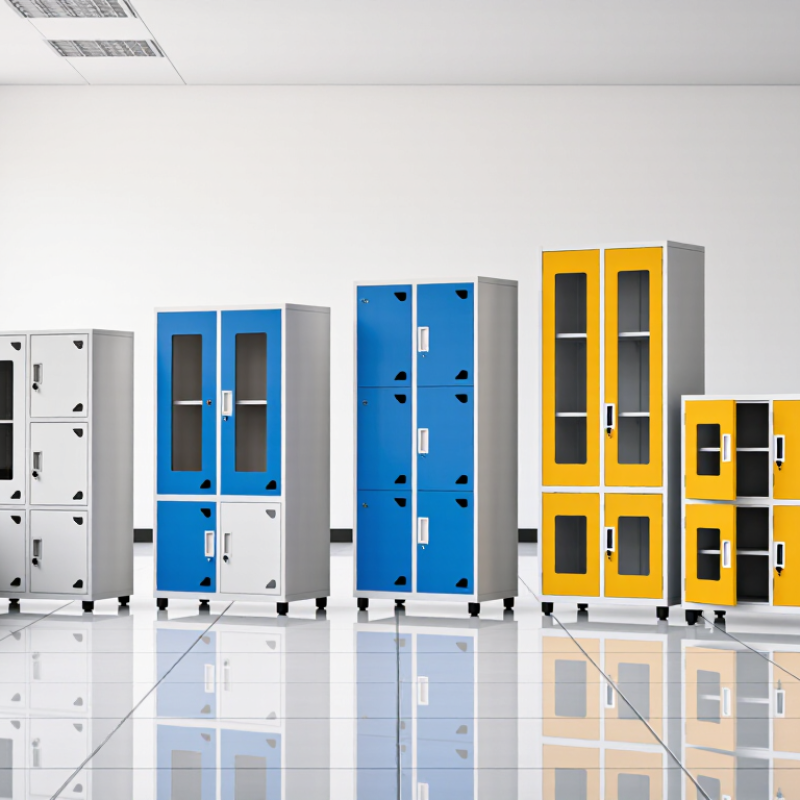
Choosing an Acid-Base Cabinet is not just a matter of comparing prices or exterior dimensions. Global buyers need to consider the chemicals being stored, the working environment, and the people who will use the cabinet each day. A narrow cabinet beside a laboratory bench may suit small containers, while a busy production area may need greater capacity and clear access. Details matter.

This guide to the Top 10 Acid Base Cabinets for Global Buyers compares practical features, including cabinet materials, shelf design, door operation, labeling, and available ventilation options. It also considers how product documentation and supplier support can affect purchasing decisions across different regions. Fit comes first. A cabinet should match the intended chemicals and site conditions, not just a product photo.

Acids and bases can be incompatible, so storage arrangements should follow each chemical’s safety data sheet and the manufacturer’s guidance. Buyers should also confirm applicable local requirements with qualified safety professionals before ordering. A listed feature does not guarantee suitability for every substance or workplace. That part can be easy to overlook. Honest comparisons leave room for uncertainty: product specifications may not show how a cabinet performs in a particular facility. The selections ahead are intended to help buyers ask better questions, compare options carefully, and choose equipment suited to their actual storage needs.
Top 10 Acid Base Cabinets for Global Buyers

What Acid and Base Cabinets Are and How They Protect Users

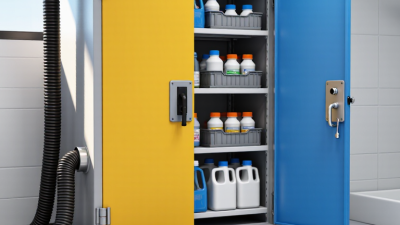
Acid and base cabinets are storage units designed for corrosive chemicals. Their resistant interiors, compatible shelves, and leak-control features help limit damage from spills. They also keep containers organized and reduce the chance of accidental contact. Acids and bases should be stored separately, with clear labels and closed, compatible containers. Separation matters. A cabinet cannot prevent every exposure, but it can add a practical barrier between a leak and nearby people. Ventilation needs depend on the chemicals and cabinet design; follow safety data sheets and facility procedures.

Tips: Check container labels before storage. Keep incompatible chemicals apart, and use a compatible tray to catch drips. Do not overload shelves. Keep the cabinet accessible, but away from heat and routine traffic.

Inspect cabinets regularly for corrosion, residue, damaged seals, or unstable shelves. A small stain beneath a bottle may signal a slow leak, not just a messy shelf. Remove damaged containers using your site’s procedures, and wear the required protective equipment. Even careful teams can miss a detail during a busy shift. Record inspections, and review storage arrangements when chemicals change. Cabinets support safe handling; they do not replace training, protective equipment, or a site-specific risk assessment.
How Acid and Base Cabinets Differ in Materials and Design

Top 10 Acid Base Cabinets for Global Buyers

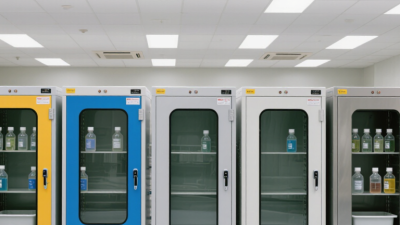
Acid and base cabinets may look similar, but their materials and layouts serve different risks. Acid cabinets often use corrosion-resistant coatings or polymer liners to protect shelves and seams. Some models include a spill tray that catches drips from bottles. Bases can also corrode certain metals, so a general-purpose cabinet is not automatically suitable. Check compatibility with the specific chemicals and their safety data sheets.

Design matters as much as material. Acid cabinets commonly separate containers with adjustable shelves and raised edges. Base cabinets should provide stable shelving and enough space to keep containers upright. Store acids and bases in separate cabinets, not opposite ends of one cabinet. Ventilation is not always required; adding it without proper design can create new hazards. Details vary. I have seen buyers focus on the outer finish and overlook seams, hinges, and tray capacity. That is an easy mistake.

Tips: Confirm the cabinet’s chemical compatibility, load rating, and spill capacity before purchase. Inspect joints and shelf coatings regularly. Ask whether ventilation is appropriate for your chemicals and local requirements. A label alone is not proof.

Top 10 Acid Base Cabinets for Global Buyers - How Acid and Base Cabinets Differ in Materials and Design

Representative pH values help illustrate why acids and bases require separate, chemically compatible storage.

Values are approximate examples; actual pH varies with concentration, formulation, and temperature. Choose cabinet materials and liners for the specific chemicals being stored, and follow the chemical SDS and applicable local requirements. Acid and base cabinets are generally separated to reduce the risk of incompatible chemicals contacting one another.

Safety Standards and Features Global Buyers Should Evaluate

For global buyers, an acid-base cabinet should match the chemicals it will actually store. Check each product’s safety data sheet and confirm that the cabinet body, lining, shelves, and seals are compatible. A coating that resists one acid may not withstand another. Look for a contained sump that can hold leaks, plus shelves that remain stable under the stated load. Doors should close securely without sticking, even when the cabinet is fully stocked. Small details matter.

Tips: Ask for material compatibility data, load ratings, and clear installation guidance. Confirm whether ventilation is recommended for your chemicals; adding a vent without technical review may create new risks. Keep incompatible acids and bases in separate, clearly marked cabinets.

Standards and certification requirements vary by destination and facility, so request current test records and verify them with a qualified safety professional. Check that labels remain legible, hardware resists corrosion, and replacement parts can be sourced locally. Measure doorways and work areas before ordering; a compliant cabinet is still impractical if it cannot be installed safely. Not every feature is useful. I would also question broad claims such as “universal chemical resistance” and ask for evidence tied to the intended substances.

How to Compare Cabinet Capacity, Ventilation, and Installation Needs

Acid-base cabinet comparisons should begin with usable capacity, not the number of bottles shown in a product photo. Measure the largest container, secondary tray, and space needed to remove each bottle safely. Check shelf load ratings too; glass containers and spill trays add weight quickly.

OSHA’s Laboratory Safety Guidance calls for chemical storage and ventilation procedures in a written Chemical Hygiene Plan, but it does not set one universal air-change rate for every laboratory. That matters. A ventilated cabinet is not automatically the right choice for every acid or base.

Ask what the cabinet exhaust connects to, where replacement air enters, and how airflow will be verified after installation. ASHRAE Standard 110-2016 describes tracer-gas testing for evaluating laboratory fume hoods; it is a useful reference for understanding performance testing, though it is not a cabinet certification. Keep that distinction clear.

Confirm duct size, fan location, exhaust compatibility, and local facilities requirements before ordering. A cabinet that fits the room may still obstruct an aisle or conflict with a sink, eyewash, or service panel. I would also confirm shelf spacing with actual containers in hand; catalog dimensions can hide awkward clearances. Slightly inconvenient, but worth checking.

Top 10 Acid and Base Cabinet Options for Global Buyers

Top 10 Acid Base Cabinets for Global Buyers

Acid and base cabinet options differ in capacity, construction, ventilation, and spill control. Buyers should match each cabinet to the chemicals actually stored, not simply choose the largest model. For corrosive liquids, inspect the liner, seams, shelves, and sump. A small gap near a joint can become a costly weakness. Polyethylene interiors suit many corrosives, while coated steel may fit other site requirements; verify chemical compatibility with the manufacturer’s documentation. Separate acids from bases, and keep incompatible substances in distinct cabinets.

The International Labour Organization estimated 2.78 million work-related deaths and 374 million non-fatal work-related injuries annually in its 2019 global estimates. These figures cover all workplace hazards, not chemical cabinets alone, but they underscore why storage design deserves attention. Global buyers should also compare usable shelf load, door clearance, anchoring options, and local service support. A cabinet that meets a specification on paper may still be awkward in a narrow laboratory aisle. Requirements vary by location, so confirm applicable safety standards before purchase.

Tips: Request a written compatibility chart for every stored chemical. Check that the sump can contain a credible spill volume, and label cabinets clearly. Ask how shelves and liners are cleaned or replaced. A practical detail: test the door with gloves on. It is easy to overlook. Some procurement plans still prioritize price over installation and maintenance; that trade-off deserves a second look.

Top 10 Acid Base Cabinets for Global Buyers - Top 10 Acid and Base Cabinet Options for Global Buyers
No. Cabinet Option Typical Construction Indicative Capacity Example Planning Footprint (W × D × H) Suitable Storage Profile Key Buying Considerations
1 Compact under-bench acid cabinet Polyethylene or polypropylene body with a chemically compatible spill tray About 15–30 L Approx. 300–450 × 450–600 × 500–700 mm Small containers of compatible corrosive liquids in laboratories with limited floor space Check bench clearance, container height, tray capacity, and resistance to the specific chemicals listed in their safety data sheets (SDSs).
2 Compact under-bench base cabinet Polyethylene or polypropylene construction; dedicated base-storage configuration About 15–30 L Approx. 300–450 × 450–600 × 500–700 mm Small quantities of compatible alkaline solutions Keep bases separate from acids. Confirm that shelves, hinges, seals, and any metal fittings are suitable for the stored chemicals.
3 Single-door general-purpose acid cabinet Corrosion-resistant polymer construction or suitably coated metal with a compatible liner About 30–60 L Approx. 450–600 × 450–600 × 900–1200 mm Routine storage of smaller acid containers in a dedicated, clearly identified cabinet Confirm usable shelf dimensions, load rating, door swing, ventilation requirements, and chemical compatibility before purchase.
4 Single-door general-purpose base cabinet Polyethylene or polypropylene, or a corrosion-resistant lined construction About 30–60 L Approx. 450–600 × 450–600 × 900–1200 mm Routine storage of compatible base containers, separate from acids Choose a dedicated base cabinet rather than sharing storage with acids; verify the materials against the SDS for each chemical.
5 Double-door, mid-capacity acid cabinet Polymer construction or coated metal with corrosion-resistant internal surfaces About 60–120 L Approx. 750–1000 × 500–650 × 1200–1600 mm Multiple compatible acid containers for a shared laboratory or work area Check total shelf load, spill containment, access width, and whether separate internal compartments are appropriate for the chemicals stored.
6 Double-door, mid-capacity base cabinet Polyethylene or polypropylene body, or a suitably lined corrosion-resistant cabinet About 60–120 L Approx. 750–1000 × 500–650 × 1200–1600 mm Several compatible alkaline containers in a dedicated base-storage area Confirm the cabinet is clearly labeled for bases and has compatible shelves and a suitable spill tray.
7 High-capacity acid storage cabinet Heavy-duty polymer or corrosion-resistant lined construction with reinforced shelves About 120–250 L Approx. 900–1200 × 600–750 × 1600–1900 mm Higher-volume storage of compatible acids in a designated storage room or laboratory area Review floor loading, cabinet stability, access route, anchoring guidance, and the required containment volume for the site.
8 High-capacity base storage cabinet Heavy-duty polyethylene or polypropylene, or lined corrosion-resistant construction About 120–250 L Approx. 900–1200 × 600–750 × 1600–1900 mm Higher-volume storage of compatible alkaline liquids, segregated from acids Check shelf capacity and spill containment; do not assume that a cabinet suitable for one base is suitable for every alkaline chemical.
9 Vent-ready corrosive cabinet Corrosion-resistant cabinet body with a provision for connection to an appropriate exhaust system About 60–200 L Approx. 600–1200 × 500–750 × 900–1900 mm Storage situations where a risk assessment or local rules call for controlled exhaust Ventilation is not suitable or required for every chemical or cabinet. Confirm the design with a qualified facilities or safety professional; do not connect to general ventilation without review.
10 Modular segregated acid-and-base storage setup Two separate, clearly labeled cabinets—one for acids and one for bases—with compatible trays About 30–120 L per cabinet Each unit approx. 450–1000 × 450–650 × 900–1600 mm Facilities needing distinct storage locations for acids and bases with flexible capacity Keep the cabinets physically separate as required by the site risk assessment and applicable rules. Segregate incompatible acids from one another where needed.
Note: Capacities and dimensions are indicative planning ranges, not product specifications or regulatory limits. Actual cabinet dimensions, usable capacity, shelf loads, and containment volumes vary by design. Select materials and storage arrangements based on each chemical’s SDS, chemical compatibility, the site risk assessment, and applicable local requirements. Never store incompatible chemicals together; in particular, keep acids and bases segregated.