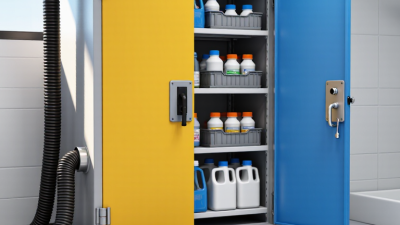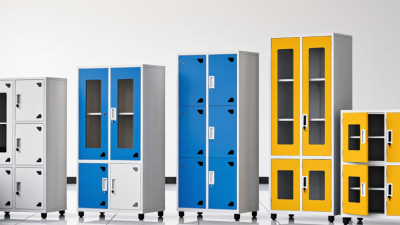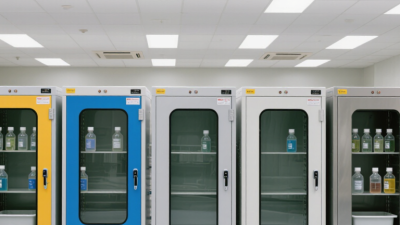
A safe laboratory begins with storage that matches the chemicals inside. An Acid-Base Cabinet helps separate corrosive materials, reduce spill exposure, and keep everyday handling more controlled. Yet supplier pages can make similar cabinets look interchangeable. They are not. Door construction, shelf design, labeling, ventilation options, and delivery support can differ in ways that matter beside a busy laboratory bench.
Market context helps explain the growing attention to laboratory infrastructure. Grand View Research estimated the global laboratory furniture market at about US$4.7 billion in 2023 and projected continued growth through 2030. That broad category includes many products; it does not provide a standalone market size for acid-base cabinets. That distinction matters. When comparing China-based suppliers, buyers should verify cabinet materials, load capacity, documentation, customization, and after-sales service rather than relying on market growth alone.
Laboratory safety expert James A. Kaufman, founder of the Laboratory Safety Institute, is widely quoted as saying, “Safety is not a priority, because priorities change. Safety is a value.” It is a useful reminder, though a cabinet cannot replace training or sound storage procedures. Details matter. This guide examines China’s leading Acid-Base Cabinet suppliers through practical questions: what their products are built for, what evidence they provide, and how clearly they support buyers after delivery. The comparison also leaves room for uncertainty, because product descriptions do not always reveal how a cabinet will perform in a real facility.

Acid and base cabinets should create a clear physical barrier between incompatible chemicals. Store acids and bases in separate, corrosion-resistant cabinets with dedicated secondary containment. Never share a tray. Check each chemical’s safety data sheet (SDS), including its concentration and additives. Oxidizing acids may also need separation from organic acids. Labels alone can mislead.
The U.S. EPA’s 2022 TRI National Analysis reports that facilities managed 21.3 billion pounds of production-related waste. Of that, 88% was recycled, used for energy recovery, or treated. This is not a cabinet-failure statistic, but it shows the scale of routine chemical handling. Keep containers closed, upright, and easy to inspect. Leave room around bottles. Use a written, material-specific spill procedure. Inspect often.
When comparing China-based suppliers, request cabinet material compatibility data, shelf load ratings, sump capacity, and test documentation. Check whether hinges, latches, and labels can withstand corrosive conditions. A cabinet is one control. It cannot fix poor segregation, unreadable labels, or an outdated inventory. Small gaps matter.

When comparing China suppliers, start with the chemicals, container sizes, and room conditions the cabinet must handle. Coated steel offers a rigid structure and suits many storage needs, but damaged coating can expose metal to corrosion. Polyethylene resists many acids and bases, though heat, weight limits, and chemical compatibility still matter. Check product specifications against the exact substances stored; “chemical resistant” is not a universal guarantee.
Ventilation also needs careful review. Some cabinets are designed for connection to an exhaust system, while others are not. Confirm airflow requirements, duct connections, and whether the cabinet’s intended use matches your laboratory procedures. A cabinet is not a replacement for a fume hood. Small details matter. Ask suppliers for material data, load ratings, test information, and clear drawings. Compare these documents, not just exterior finish or price.
Tips: Inspect seams, hinges, shelves, and door alignment in product photos or samples. Ask how spills are contained and cleaned. Verify that ventilation claims include measurable specifications. If information is vague, pause and ask again; a polished brochure can still leave important questions unanswered.
For buyers comparing China-based acid and base cabinet suppliers, compliance begins with the laboratory’s actual hazards. OSHA’s Laboratory Standard, 29 CFR 1910.1450, requires a written Chemical Hygiene Plan, employee information, and training. It does not certify a cabinet or prescribe one universal cabinet design. Buyers should check construction, ventilation needs, capacity, and chemical compatibility against their own procedures.
OSHA’s 2012 Hazard Communication Standard rule estimated coverage of 43 million workers across five million workplaces. That figure shows why clear hazard communication matters; it does not prove that any cabinet alone prevents incidents. The UN Globally Harmonized System defines nine hazard pictograms. For corrosives, the corrosion symbol can help staff recognize risks, but pictograms do not replace labels, safety data sheets, or training. Keep incompatible acids and bases segregated according to their safety data sheets. Small details matter.
Ask suppliers for material specifications, load limits, test documentation, and guidance on labeling and segregation. Confirm that translated instructions remain clear to the people using the cabinets. A polished certificate is not enough if it does not match the supplied model. This check can feel tedious, and buyers may still miss a mismatch; periodic review with laboratory safety staff is worthwhile.
The GHS uses nine hazard pictograms. Counts shown are pictograms associated with each domain; the Corrosion pictogram applies to both physical and health hazards, so it is counted in both. OSHA 29 CFR 1910.1450 requires laboratory employers to maintain a Chemical Hygiene Plan. Use current Safety Data Sheets to guide chemical segregation and cabinet selection; pictograms do not replace compatibility assessment.
When comparing China-based acid and base cabinet suppliers, ask for test reports tied to the exact model and materials you plan to buy. A report for a similar cabinet is not enough. Check whether testing covers chemical resistance, shelf loading, spill containment, door operation, and ventilation performance, where applicable. Request the test method, date, sample description, and laboratory details. Then compare these with the cabinet’s drawings and quoted specifications.
Look closely at certifications and their scope. A certificate may cover a management system, not the cabinet itself. Confirm the issuing body, validity dates, factory address, and covered product range. If a supplier claims compliance with a particular standard, ask for the relevant clause or report rather than relying on a logo. Details matter. Keep copies with your purchase records, and clarify who is responsible if the delivered unit differs from the tested sample.
A factory audit can reveal gaps that paperwork misses. Walk through incoming sheet inspection, cutting, welding, coating, assembly, and final checks. Ask staff to trace one cabinet from material batch to inspection record. Open doors repeatedly; inspect welds, hinges, labels, and the removable spill tray. Notice whether measuring tools have current calibration records. A tidy showroom proves little. Remote audits can help, but they cannot show every process clearly. Even a careful audit has limits, so record unresolved questions and request corrective evidence before shipment.
Use this checklist to compare acid and base storage cabinet manufacturers. Requirements vary by cabinet material, chemicals stored, installation location, and destination market; agree on the test protocol and acceptance criteria before ordering.
| Evaluation Dimension | What to Verify | Evidence or Test Method | Practical Acceptance Check | Weight |
|---|---|---|---|---|
| Chemical compatibility | Suitability of the cabinet body, lining, shelves, seals, hinges, and hardware for the specific acids or bases to be stored. | Request a chemical-resistance chart that identifies the chemical, concentration, temperature, exposure duration, and material tested. Review test reports or conduct a representative compatibility test. | All wetted or exposed components are identified, and compatibility is confirmed for the actual chemical list and operating conditions. | 20% |
| Construction and materials | Material grade and thickness, seam quality, surface finish, corrosion protection, door alignment, and shelf support design. | Review drawings, bill of materials, material certificates where available, coating specifications, and production samples. Inspect welds, joints, edges, and hardware. | Materials and dimensions match the approved specification; no sharp edges, visible corrosion, loose fittings, or unsealed joints in areas intended to contain spills. | 12% |
| Spill containment | Sump or tray capacity, construction, access for cleaning, and resistance to leakage. | Check the stated containment volume against the project requirement. Review drawings and the supplier’s documented leak-test procedure; witness a water test when appropriate. | Containment volume is stated in writing, the tray is removable or cleanable as specified, and no leakage is observed during the agreed test. | 12% |
| Load and door performance | Rated shelf load, total cabinet load, shelf-retention features, door operation, hinges, and latches. | Request the load-test method and results. Confirm whether ratings apply to evenly distributed loads. Check door alignment and operate doors and latches during inspection. | Each shelf supports its declared load without permanent deformation; doors and latches operate consistently and do not bind. | 10% |
| Ventilation and configuration | Whether ventilation is required for the chemicals and site, and whether ports, caps, or duct connections are supplied as specified. | Review the chemical risk assessment and installation plan. Verify port dimensions, closure arrangements, and any airflow requirements with the site’s EHS professional. | Ventilation is treated as a project-specific design decision; the supplier does not claim that a cabinet eliminates the need for a risk assessment or safe handling controls. | 8% |
| Test documentation | Traceable reports that identify the tested product, materials, method, results, date, and issuing laboratory. | Check report scope and sample identity. Where independent testing is required, verify the laboratory’s accreditation and that the relevant test falls within its accredited scope. | Reports relate to the offered cabinet configuration, not merely a similar product, and unresolved test failures or exclusions are disclosed. | 10% |
| Standards and certifications | Validity, scope, issuing body, and product or site coverage of any standards or certificates claimed by the supplier. | Verify certificates directly with the issuing organization. ISO 9001 is a quality-management system certification, not product certification. Assess standards such as EN 14727 only when relevant to the product and target market. | Claims are specific and verifiable. Do not treat a general management-system certificate, CE marking, or an unrelated test report as proof of chemical compatibility or cabinet performance. | 10% |
| Factory quality controls | Incoming-material inspection, in-process checks, final inspection, nonconformance handling, calibration, and batch traceability. | Review inspection plans, sample records, corrective-action records, calibration status, and traceability from raw materials to finished goods. | Records show defined acceptance criteria, responsible personnel, inspection frequency, and documented action when a product fails inspection. | 8% |
| Factory audit | Whether the audited facility actually manufactures the offered cabinets and controls the relevant production processes. | Conduct an on-site or live video audit. Compare the business license and factory address with the production site; observe fabrication, finishing, assembly, storage, and final inspection. | Production capacity and equipment are consistent with the order; subcontracted processes, site changes, and quality responsibilities are disclosed. | 5% |
| Order consistency and change control | Controls for approved drawings, materials, suppliers, tooling, and production changes between sample approval and mass production. | Request a signed specification, approved sample record, change-control procedure, and pre-shipment inspection plan. | No material or design substitution is made without written approval; production units match the approved sample and specification. | 3% |
| Packaging, shipping, and support | Protection from impact, moisture, and handling damage; installation instructions; spare parts; warranty terms; and response process. | Review packaging drawings or a packed sample, shipment inspection records, written warranty terms, and the procedure for damage or quality claims. | Packaging suits the transport route, and responsibilities, claim timelines, replacement parts, and after-sales contacts are documented before purchase. | 2% |
Scoring guidance: Score each dimension from 0 to 5, where 0 means no acceptable evidence and 5 means fully verified performance. Multiply each score by its weight to compare suppliers. Treat chemical compatibility, containment, and traceable product-specific evidence as essential purchase gates, regardless of the total score. Confirm applicable local regulations and site requirements with qualified EHS personnel before installation.
When comparing suppliers, check the cabinet’s stated capacity against your actual containers. Ask for shelf load ratings, total load limits, and details about the base or spill sump. A rating without test conditions is hard to assess. Request drawings or test records, and confirm that materials suit the acids or bases you plan to store. Small details matter, such as door clearance and shelf spacing.
Review warranty terms before discussing price. Confirm what is covered, how long coverage lasts, and who handles replacement parts. Ask whether customization affects the warranty. For made-to-order units, provide clear requirements for dimensions, ventilation connections, labels, and lock options. Approve a written drawing before production. It may feel slow, but changes after shipment can be costly.
Export support also deserves close attention: verify packaging, shipping documents, lead time, and who coordinates delivery to your destination.
Tips: Request a quotation with specifications, warranty terms, and export costs listed separately. Ask for cabinet photos and packing details. Check each item against your site needs; supplier answers can be useful, but they are not a substitute for your own review.